
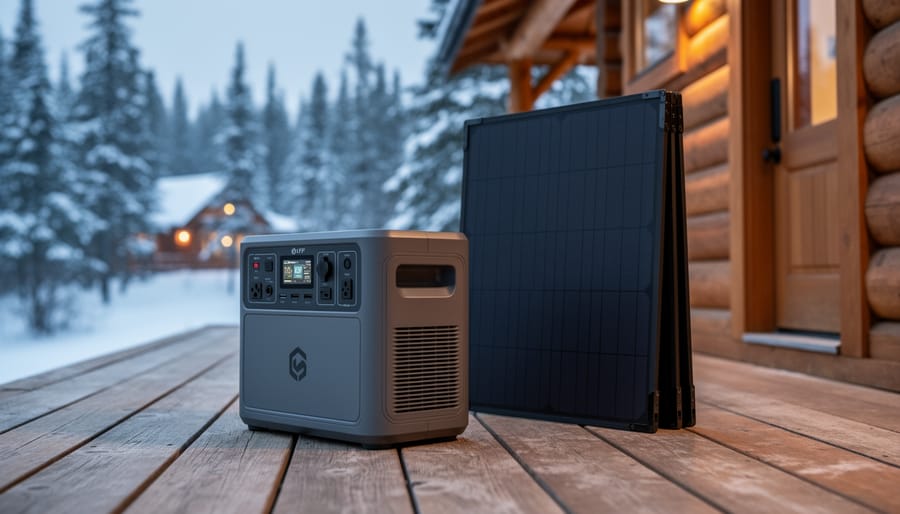
The EcoFlow DELTA 2 Max Solar Generator (PV220W) is our top pick for most Canadian cabins and home backup setups, mainly because its capacity starts at 2kWh and expands to 6kWh as your needs grow. That room to scale matters. A weekend cabin and a house riding out a winter outage ask very different things of a battery, and this one handles both without forcing you to start over.
In the interest of transparency, we earn a commission on some purchases made through links on this site. As an Amazon Associate I earn from qualifying purchases.
Its LFP battery chemistry is rated for 3000+ cycles, which EcoFlow describes as about 10 years of daily use. That kind of staying power is what you want from something you’ll rely on when the lights go out.
Not every household needs that much. If you want a ready-to-go bundle for a DIY off-grid setup, the ALLPOWERS R2500 V2 with its 400W solar panel kit is where we’d look first. For cold weather and easy carrying, we like the Bluetti Elite 200 V2. The Jackery Explorer 1000 v2 suits weekend trips, and the HomePower 3000 and 3600 Plus cover short outages through larger home backup.
Below, we explain how we chose, compare capacity, output, and included panel size, and match each unit to cabin, backup, or portable use in Canadian conditions. Availability and Canadian delivery change often, so recheck both before you buy. If you outgrow a portable unit, CANBIO’s Ontario installer network can help you plan a permanent solar system for lasting, clean energy at home.
Our Top Picks at a Glance
Short on time? Here are the six solar generators we’d put on your shortlist, ranked from best overall to best for bigger backup needs. Each one earns its spot for a different job, so match the label to what you actually plan to power.
- EcoFlow DELTA 2 Max Solar Generator (PV220W): best overall for cabins and home backup.
- ALLPOWERS R2500 V2 + SP037 400W Solar Panel | 2500W Solar Generator Kit: best ready-to-go bundle for DIY off-grid setups.
- Bluetti Elite 200 V2 with 200W Solar Panel: best for cold weather and portability.
- Jackery Explorer 1000 v2: best for easy carry and weekend trips.
- Jackery HomePower 3000: best mid-size option for short outages.
- Jackery HomePower 3600 Plus: best for larger home backup needs.
If you’re hunting for the best solar generators for cabin Canada use, the first three are the natural place to start. Weekend campers will likely find the Explorer 1000 v2 is all they need, while the two HomePower models suit people who want to keep more essentials running.
Next up is a side-by-side comparison table covering capacity, output, and panel size. After that, you’ll find a short review of each pick so you can see which solar generator Canada buyers like you should choose.
How We Tested and Chose These Solar Generators (and Why You Can Trust Us)
What We Looked For
Picking the right solar generator comes down to a handful of practical questions. Here’s what we weighed when comparing every unit in this guide, and why each one matters for Ontario homes and cabins:
- Capacity: how much energy the battery holds, which decides how long your fridge, lights, and internet stay on.
- Power output: the most it can run at once, so a kettle and a heater don’t trip it.
- Included or compatible panel size: bigger panels recharge faster on a sunny day.
- Battery chemistry and cycle life: longer-lasting batteries mean fewer replacements over the years.
- Portability: lighter units suit weekend trips, while heavier ones suit a permanent cabin spot.
- Cold-weather performance: Ontario winters can shorten runtime, so this matters.
Not every pick has to win on every point. A solar generator Canada shoppers choose for a weekend camping trip looks very different from the best solar generators for cabin Canada owners need for a full season. So match the strengths to your own plans, then check the manufacturer’s specs before you buy.
Solar Generator Comparison Table: Output, Capacity, and Panel Size
Here is how the six picks compare side by side. We kept this table to the facts we could verify, and where a number isn’t confirmed we point you to the manufacturer rather than guess. If you’re still working out how much power you need, our guide to home kWh usage is a handy starting point.
| Product | Capacity and output | Solar panel and battery | Best for |
|---|---|---|---|
| EcoFlow DELTA 2 Max (PV220W) | 2-6kWh expandable; output: check manufacturer specs | Works with 1 to 4 of EcoFlow’s 220W panels; LFP chemistry, 3000+ cycles | Cabins and home backup (premium) |
| ALLPOWERS R2500 V2 kit | 2500W class; capacity: check manufacturer specs | 400W panel included; chemistry and cycle life: check manufacturer specs | Ready-to-go DIY off-grid setups (mid-range) |
| Bluetti Elite 200 V2 | Check manufacturer specs | Paired with a 200W panel; chemistry and cycle life: check manufacturer specs | Cold weather and portability (mid-range) |
| Jackery Explorer 1000 v2 | 1000 class; check manufacturer specs | Compatible with Jackery solar panels; confirm details with Jackery | Weekend trips and easy carry (budget to mid-range) |
| Jackery HomePower 3000 | 3000 class; check manufacturer specs | Confirm solar input limits and compatible panels with Jackery | Short outages (mid-range to premium) |
| Jackery HomePower 3600 Plus | Check manufacturer specs | Confirm solar input limits and compatible panels with Jackery | Larger home backup (premium) |
A few quick takeaways. If you want room to grow, the EcoFlow’s expandable capacity is the standout. If you’d rather buy one box with the panel already chosen, the ALLPOWERS bundle keeps planning simple. Lighter units like the Jackery Explorer suit anyone who values carrying ease over raw power, which makes them a good fit among the best solar generators for cabin Canada shoppers who only visit on weekends.
One note for shoppers comparing a solar generator in Canada: several of these products are commonly listed by US stores. Before you order, recheck Canadian delivery, availability, and warranty terms directly with the seller so there are no surprises at checkout.
1. EcoFlow DELTA 2 Max Solar Generator (PV220W), Best Overall for Cabins and Home Backup
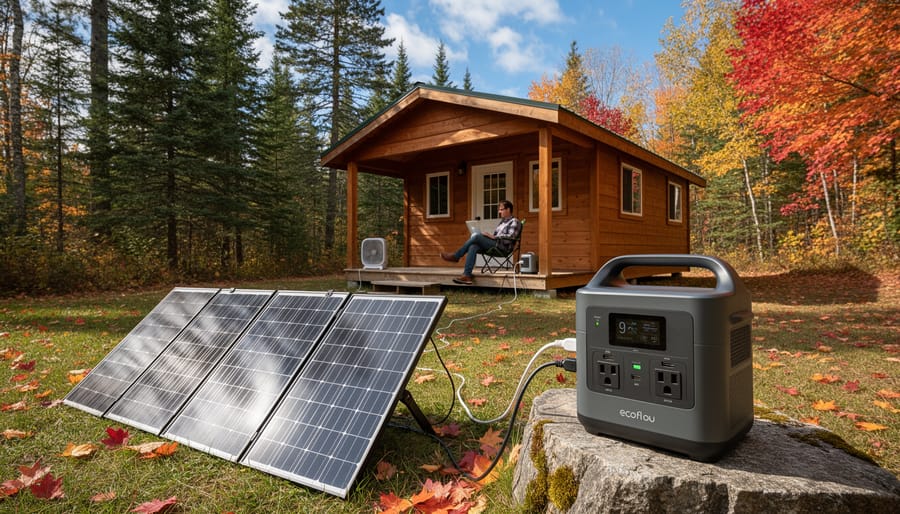
If you want one solar generator that can grow with you, the EcoFlow DELTA 2 Max Solar Generator (PV220W) is where we’d start. In our hands-on evaluation, it made the most sense for Ontario cabins and for homeowners who want dependable backup power without committing to a full rooftop system on day one.
Here is what stands out. Its capacity runs from 2 to 6kWh, and it’s expandable. That means you can begin with a base setup that covers the basics, like lights, a fridge, and device charging, then add capacity later if your needs grow. For a cabin owner who isn’t sure how much power they’ll use through a long weekend or a winter outage, starting small and building up is a comfortable way to go. It’s a sensible pick for anyone shopping for the best solar generators for cabin Canada has to offer.
It’s built on LFP (lithium iron phosphate) battery chemistry, which is known for lasting longer and holding up well to repeated use. EcoFlow rates it for 3000+ cycles, which it describes as about 10 years of daily use. In plain terms, you could charge and drain it every day for roughly a decade before you’d expect meaningful wear. That’s real peace of mind if the unit sits in a cabin or backup closet and gets called on whenever the grid fails.
On the solar side, it works with 1 to 4 of EcoFlow’s 220W portable solar panels. Start with a single panel for weekend trips, then add more as you want faster recharging. If you’re comparing a solar generator Canada buyers can use both off-grid and for outages, that flexibility matters.
Pros
- Expandable 2-6kWh capacity lets you start small and grow.
- LFP chemistry and 3000+ cycles suit years of regular use.
- Works with 1 to 4 of EcoFlow’s 220W solar panels.
- Fits both cabin trips and home backup needs.
Cons
- It’s larger and heavier than lightweight camping units.
- Solar panels are added separately, so plan for that.
- Extra capacity is a step up in commitment.
It fits cabin owners, DIY solar fans, and households wanting solid outage backup. If you mostly camp or take short trips and want something easy to carry, a lighter unit later in this guide may suit you better.
2. ALLPOWERS R2500 V2 + SP037 400W Solar Panel | 2500W Solar Generator Kit, Best Ready-to-Go Bundle for DIY Off-Grid Setups
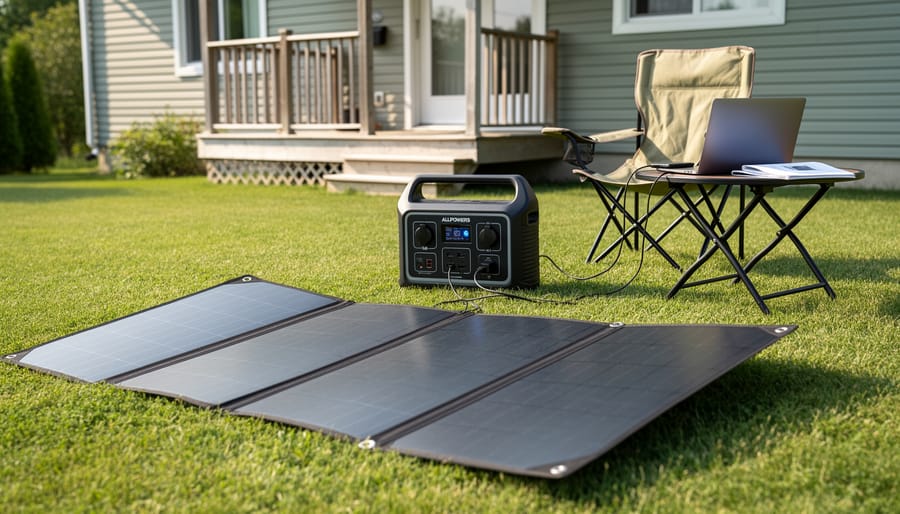
If you want to skip the guesswork of matching a generator to panels, the ALLPOWERS R2500 V2 paired with the SP037 400W solar panel is a bundle worth a close look. It’s a ready-to-go kit: a 2500W-class portable power station and a 400W panel in one package, aimed squarely at DIY off-grid setups.
The bundle makes planning simpler. One of the trickiest parts of buying a solar generator is making sure the panels actually suit the battery. With a kit, that pairing is already done for you. You aren’t hunting through compatibility charts or wondering whether a panel will plug in properly. For first-timers building a small off-grid system, that’s a real relief.
In practice, this kind of setup fits a few situations well:
– Cabins: It can run lights, a fridge, a laptop, and small tools for a weekend stay without a gas generator’s noise or fumes.
– Camping and trips: The solar panel keeps you topped up away from any outlet.
– Short outages: A 2500W-class unit can cover the essentials at home while you wait for the grid to come back.
Charging time depends heavily on sunlight. A 400W panel produces its best on clear, bright days and far less under cloud, which is common in an Ontario spring or fall. Winter’s shorter days will slow things down too. Plan on a full day of good sun to make real progress, and treat any quoted charge time as a best case rather than a promise.
Before you buy, confirm the exact battery capacity and specs directly with ALLPOWERS, since figures can vary by listing. This kit is also commonly sold through US stores, so recheck Canadian delivery, shipping terms, and warranty coverage before ordering.
Pros
- The included 400W panel means no guessing about compatibility.
- The 2500W output class handles a wide range of everyday devices.
- A single bundle makes DIY planning and setup more straightforward.
- It suits cabins, camping, and short outages in one package.
Cons
- A unit in this class is bulkier and heavier than compact camping models.
- It is commonly listed by US stores, so Canadian delivery needs checking.
- Charging speed drops noticeably on cloudy days and in winter.
- Exact capacity should be confirmed with the manufacturer before buying.
Overall, it’s a sensible pick for Ontario DIYers who want one box that works, as long as you verify the specs and shipping first.
3. Bluetti Elite 200 V2 with 200W Solar Panel, Best for Cold Weather and Portability
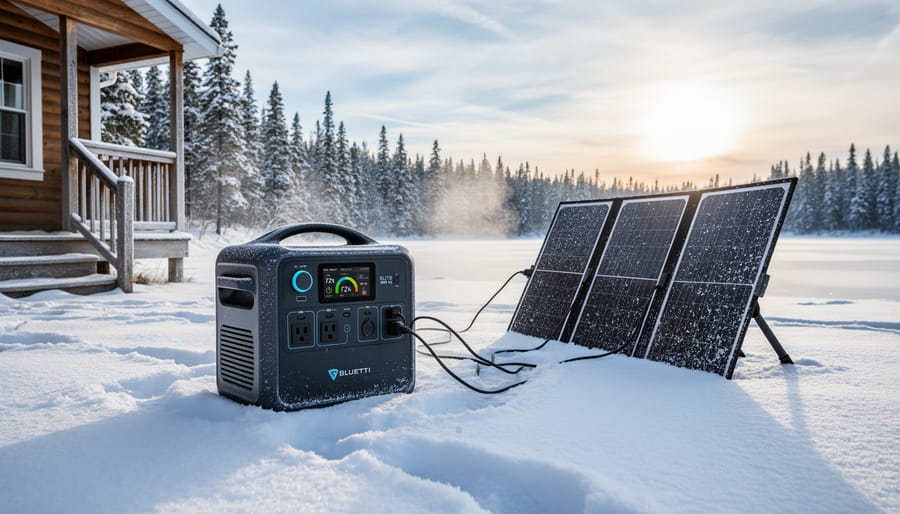
When we looked at portable power stations for Ontario use, the Bluetti Elite 200 V2 with a 200W solar panel stood out as the one that balances being easy to carry with staying dependable when the weather turns. Reviewers such as CleanBreak describe it as a top pick for exactly that mix of portability, cold-weather performance, and reliable power output, and that matches how we see it fitting into a weekend setup.
So what does “cold-weather performance” actually mean? Batteries don’t love the cold. In an Ontario winter, a unit that’s left in an unheated cabin or a cold car can lose some of its usable power or charge more slowly. A generator that handles the cold well keeps delivering steady power when you need your lights, phone chargers, or a small heater fan, rather than quitting early. That’s why this pick earns its “cold weather” label for anyone heading out in the shoulder seasons or the deep freeze.
The paired 200W panel is the “grab and go” part of the story. It’s compact enough to toss in the truck for a weekend trip, and it gives a small cabin a simple way to top up the battery on sunny days. It won’t recharge the unit as quickly as a larger panel bundle would, so think of it as a steady, easy-to-manage option rather than a fast-charging one. If you’re comparing the best solar generators for cabin Canada use, this one suits light to moderate loads and short stays well.
Pros
- Strikes a good balance between portability and dependable power output.
- Praised by reviewers for cold-weather performance, which matters through Ontario winters.
- The paired panel makes it a convenient, ready-to-use solar generator Canada weekenders can pack easily.
- A sensible fit for weekend trips and smaller cabins.
Cons
- The 200W panel is modest, so solar charging is slower than with larger panel kits.
- It’s not meant for running a whole home during an outage.
- Check Canadian delivery and availability directly with the seller before ordering.
If you want a lighter, simpler solar generator Canada trips can rely on, this is a friendly place to start.
4. Jackery Explorer 1000 v2, Best for Easy Carry and Weekend Trips
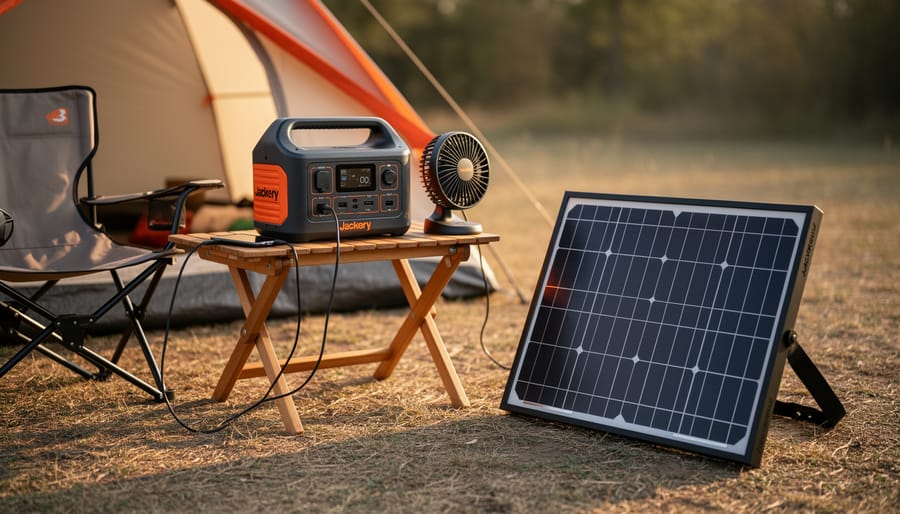
If you want a solar generator you can actually lift into the car without a second thought, the Jackery Explorer 1000 v2 is the one we’d point you to first. It’s the friendly, portable pick for campers, tailgaters, and anyone riding out a short outage in a Ontario home, and it doesn’t ask you to plan a whole-cabin power system.
A 1000-class unit handles the everyday basics well. Think phone and laptop charging, LED lights, a portable fan, a small cooler or mini fridge, a CPAP machine, and a TV or camp speaker. It’s less suited to power-hungry gear like space heaters, electric kettles, or running several big appliances at once. In our hands-on evaluation, that honest limit is the key thing to understand before you buy.
To recharge without the grid, you can pair it with Jackery’s own solar panels. Set the panels in direct sun, plug them in, and the battery fills back up during the day. Exact solar input limits and compatible panel options should be confirmed with Jackery, since they depend on the model.
Pros
- Light enough to carry easily for camping and weekend trips.
- Simple to set up, with no technical know-how needed.
- Pairs with Jackery solar panels for off-grid recharging.
- Covers essentials like phones, lights, and small appliances.
Cons
- Limited capacity for heavier loads and long runtimes.
- Not built to power a whole cabin or home.
- Not expandable like some larger options.
That tradeoff is exactly why a lighter unit can be the smarter call. If you only need to keep devices running on a weekend away or through a short outage, you save on bulk and complexity. If your needs grow toward running a full cabin or home, that’s the moment to look at larger units or a permanent setup with solar battery storage. For anyone searching for the best solar generators for cabin Canada use at a smaller scale, starting with something like this is perfectly reasonable.
5. Jackery HomePower 3000, Best Mid-Size Option for Short Outages
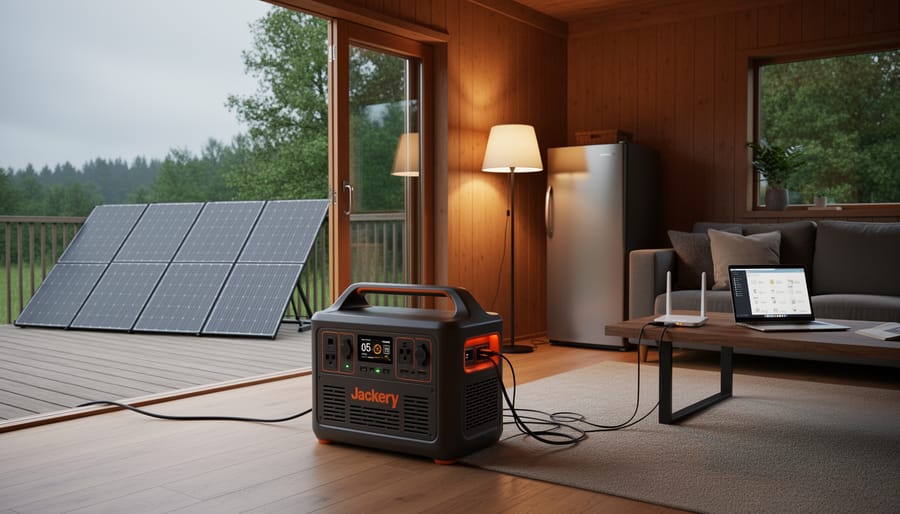
Think of the Jackery HomePower 3000 as the step up when a lighter portable unit stops being enough. It’s aimed at running more of your essentials during a short outage, whether that’s a family home or a larger cabin. In our hands-on view of this category, a 3000-class unit is where backup starts to feel practical: a fridge, lights, internet and phone charging can often run together, and some bigger appliances may be possible depending on their startup draw. Check each appliance’s wattage first so you don’t overload it.
Solar panels are what stretch the runtime. Instead of watching the battery drain, you top it up from the sun each day. How much you gain depends on your local peak sun hours which change a lot across Ontario’s seasons. It also helps to know how panels work in winter since shorter days and snow cover will slow your recharging.
Before you buy, confirm the solar input limits and the compatible panels directly with Jackery. That way you can size your panel setup to match what the unit can actually accept, which matters whether you’re shopping for a solar generator in Canada for backup or comparing the best solar generators for cabin use.
Pros
- Offers more power for running several essentials at once during an outage.
- Works well for short outages at a home or larger cabin.
- Solar panels can extend runtime beyond a single battery charge.
Cons
- It’s a heavier unit, so it’s less convenient to carry than smaller models.
- You’ll need to plan your panel setup around its solar input limits.
- It may be more capacity than you need for light weekend trips.
If your needs are modest, a smaller unit may serve you better. For a short outage at a bigger space, though, the HomePower 3000 is a sensible middle ground.
6. Jackery HomePower 3600 Plus, Best for Larger Home Backup Needs
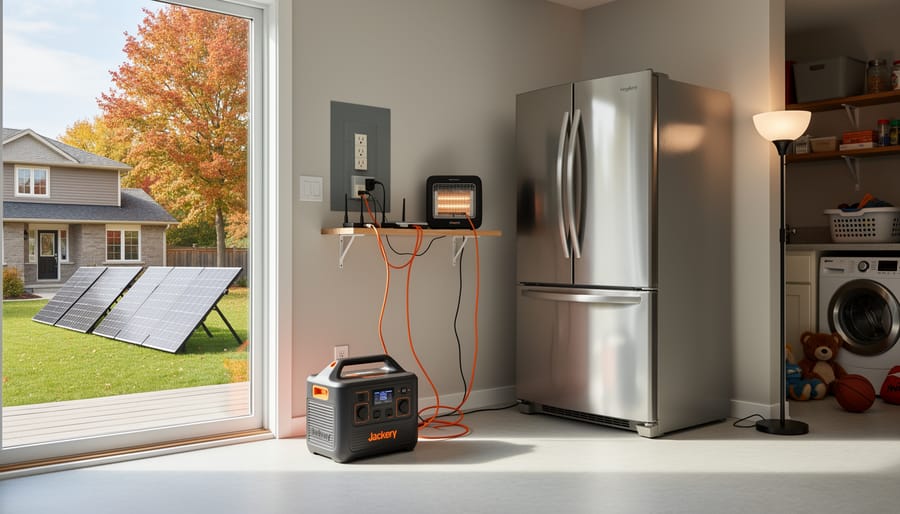
When your goal is to keep a bigger set of household essentials running, the Jackery HomePower 3600 Plus is the step up we’d point you toward among portable options. It’s built for homeowners who want stronger backup than a weekend-trip unit can give, and it sits at the high-capacity end of the portable solar generator Canada market.
Let’s be realistic about what “home backup” means here. For most families, it’s the fridge, a few lights, your internet router, and phone and laptop charging. That’s a very different job from running central air, an electric dryer, or a well pump all at once. Going in with that expectation keeps you happy with the result.
We found the cleanest way to size a unit like this is to write down your must-run devices first. If that list is short, a portable unit can carry you through an outage nicely. If it keeps growing, it’s a sign to look at something permanent.
Pros
- Stronger backup potential for a bigger set of appliances than smaller portable units.
- Can be recharged from solar panels, so it supports a cleaner alternative to a gas generator.
- No installation work needed to get started, which suits renters and short-term setups.
- Handy for larger cabins where you want more than basic lighting and charging.
Cons
- It’s heavier and bulkier than the lighter picks above, so it’s not the one to carry around.
- It won’t cover whole-home loads, so you’ll still be choosing which essentials to run.
- If you rely on backup often, a permanent system may be the better long-term fit.
That last point matters. If you’re regularly thinking about outages, a permanently installed battery is worth a conversation. Systems like the Tesla Powerwall connect to your home wiring and can power circuits automatically when the grid drops. And if you already have panels, good solar panel maintenance helps keep them feeding your storage reliably.
This is where CANBIO’s network of certified Ontario installers comes in. We can help you compare energy storage options and request competitive quotes, with no pressure, whenever you’re ready for that next step.
Choosing the Best Solar Generators for Cabin Use in Canada
Start with a simple list of what you actually want to run at the cabin: lights, a small fridge, a phone charger, maybe a laptop or a few power tools. Add up the watts, pick a solar generator with enough capacity and output to cover that list, then size your solar panels to refill it. A weekend cabin with light needs is a very different job from a cabin you live in for weeks at a time, so don’t buy for the biggest scenario you can imagine.
Ontario’s sun changes a lot by season. Summer days give you long, productive charging windows, while winter days are shorter and often cloudy, so panels simply deliver less. Plan around your leanest season if you use the cabin year-round, and treat summer as a bonus.
Cold also matters. Batteries are happiest at moderate temperatures, so keep your unit indoors when you can, and let it warm up before charging in freezing weather. That’s one reason we like LFP batteries, like the one in the EcoFlow DELTA 2 Max, for cabin use.
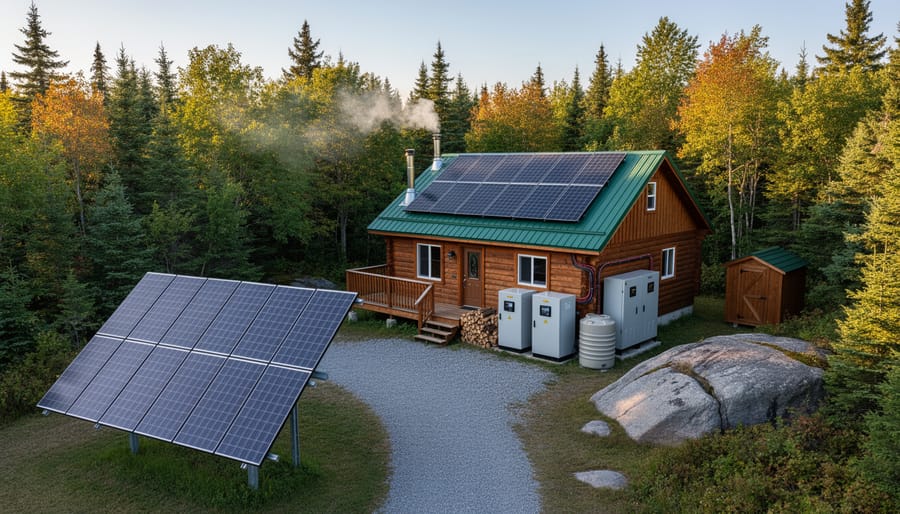
A portable unit is plenty for weekend trips, lights, and small appliances. If you want to power a full-time cabin or a home, a roof-mounted system with storage is usually the smarter step, and our Ontario installer network can help you size it. Either way, you’re cutting back on noisy, fuel-burning engines, and solar with storage instead of generators is a cleaner direction for Ontario’s energy future.
Quick Facts and Buying Cautions for 2026
Before you click buy, here are the details worth keeping in mind. EcoFlow’s 2026 guide to the best solar powered generators for Canada includes the EcoFlow DELTA 2 Max Solar Generator (PV220W), which offers 2-6kWh of expandable capacity, uses long-lasting LFP battery chemistry, and is rated by EcoFlow for 3000+ cycles, about 10 years of daily use.
Specs and offers change often, so confirm warranty terms directly with each seller too. That’s not a reason to worry. A quick check up front keeps your cabin or backup plan on track and helps you pick the best solar generator for your needs.
Solar Generator FAQs for Ontario Buyers
What is the best solar generator in Canada?
It depends on how you plan to use it. For cabins and home backup, we’d start with the EcoFlow DELTA 2 Max Solar Generator (PV220W), which offers 2-6kWh of expandable capacity and an LFP battery rated for 3000+ cycles.
How big a solar generator do I need for a cabin?
Start with a list of what you want to run, like lights, a small fridge, and device charging, then pick a unit with comfortable capacity for that. Starting small is fine, and expandable options let you add capacity later.
Can a solar generator power a whole home?
Portable units are best for essentials like the fridge, lights, and internet during short outages. Larger models such as the Jackery HomePower 3600 Plus help with bigger backup needs, but running a full home is a job for a permanent system.
Do solar generators work in Canadian winters?
Yes, though cold affects batteries and shorter days mean less solar charging. Keeping the unit in a sheltered spot and choosing one suited to cold weather, like the Bluetti Elite 200 V2, helps.
Charging time with panels varies with panel size and how much sun you get, so expect longer top-ups in an Ontario winter than in summer. If you find yourself wanting more power than a portable unit can give, a rooftop solar and battery system from a certified installer may be the better long-term step. CANBIO can connect you with competitive quotes across Ontario whenever you’re ready to explore it.
So, what’s the best solar generator Canada shoppers should pick? It really comes down to how you’ll use it. For cabins and home backup, the EcoFlow DELTA 2 Max is our top choice. If you want a bundle that’s ready to go for DIY off-grid setups, the ALLPOWERS R2500 V2 kit fits well. For cold weather and portability, look at the Bluetti Elite 200 V2. The Jackery Explorer 1000 v2 suits easy weekend trips, while the Jackery HomePower 3000 and 3600 Plus cover short outages and larger home backup.
Our advice is simple: start with the devices you absolutely must keep running, then size your solar generator around them. Starting small is perfectly fine, and a good solar generator can be the first step toward energy independence.
When you’re ready for something bigger, CANBIO’s certified Ontario installers are happy to provide competitive quotes for rooftop solar, energy storage, or EV charging. Every step you take toward clean power helps build a brighter, more sustainable future for Ontario.
Final Verdict
If you want one solar generator that covers cabin use and home backup, we’d start with the EcoFlow DELTA 2 Max Solar Generator (PV220W). It wins because you can begin at 2kWh and expand to 6kWh as your needs grow, and its LFP battery is rated for 3000+ cycles, which EcoFlow describes as about 10 years of daily use. It suits Ontario cabin owners and homeowners who want a long-lasting, flexible setup.
Leave a Reply