
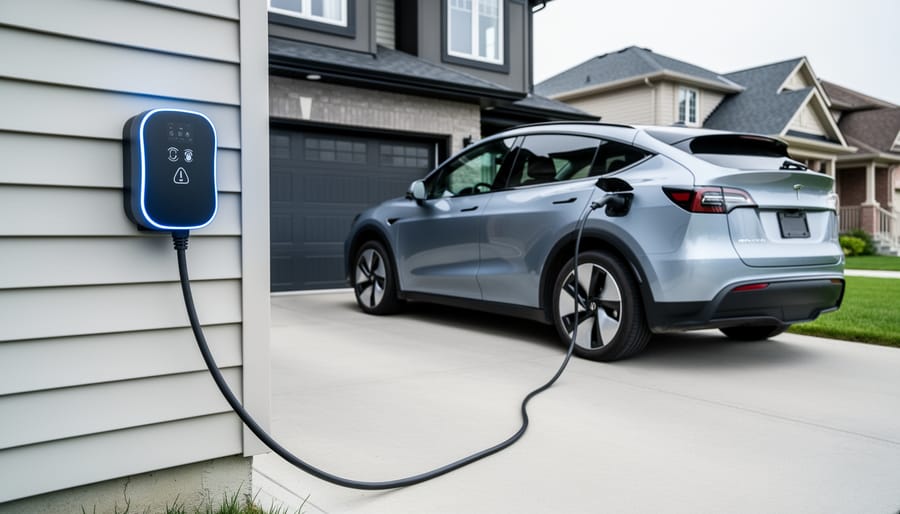
A smart home charging station combines seven key safety features that protect your electrical system, vehicle, and family while delivering faster, more efficient charging than a standard outlet. For Ontario homeowners installing an EV charger in 2026, the difference between “smart” and basic models comes down to built-in safeguards like ground fault protection, overcurrent monitoring, and temperature sensors that prevent electrical fires and equipment damage before they happen.
The average home electrical panel wasn’t designed for the continuous 7-11 kW load an EV demands nightly. That’s where smart charging technology makes the critical difference. These advanced stations communicate with your home’s electrical system in real time, automatically adjusting power delivery to prevent circuit overloads and managing loads across multiple high-draw appliances. Many Ontario electricians now recommend smart features as standard practice, not optional upgrades, because they’ve seen firsthand how older homes struggle with EV charging demands.
What makes a charging station truly “smart” goes beyond smartphone apps and scheduling. The safety intelligence matters most: automated shutoffs when wiring overheats, real-time diagnostics that catch deteriorating connections, and adaptive charging that works with your panel’s actual capacity rather than pushing it to the limit. These features align perfectly with the Ontario Electrical Safety Code requirements while giving you peace of mind that your installation won’t create hazards down the road. Understanding which smart safety features deliver genuine protection, versus marketing buzzwords, helps you make an informed choice that keeps your home safe for years to come.
Why Smart Features Matter for EV Charging Safety
A smart home charging station does more than simply deliver power to your EV, it actively monitors electrical conditions, adjusts its behaviour to prevent hazards, and communicates problems before they become dangerous. Unlike basic models that push maximum current regardless of circumstances, smart stations constantly assess your home’s electrical capacity, temperature conditions, and power quality to ensure safe operation.
For Ontario homeowners, this intelligence matters more than you might think. Many homes built before 2000 have electrical panels designed for lower loads than modern households demand, especially when adding an EV charger on top of air conditioning, electric heating, and other appliances. Smart charging stations recognize these limitations and adjust automatically, preventing the circuit overloads that basic units can trigger. They also adapt to Ontario’s extreme seasonal swings, reducing charging speed during heat waves when components run hotter and monitoring for ice buildup or moisture intrusion during harsh winter weather.
This protective intelligence addresses the real-world conditions your charging station faces every day: fluctuating grid voltage, simultaneous appliance use, temperature extremes, and the aging infrastructure common in established Ontario neighbourhoods. The seven features we’ll explore each tackle a specific safety concern that basic chargers ignore, giving you reliable protection rather than hoping nothing goes wrong.
How We Selected These Essential Safety Features
We didn’t just pull these features from a manufacturer’s marketing brochure. Each one made this list because it solves a real electrical safety problem we’ve seen in Ontario homes.
Our selection process started with input from certified electricians and EV charging installers across the province. They told us which features actually prevent dangerous situations versus which ones are nice-to-have extras. We cross-referenced their recommendations against the Canadian Electrical Code requirements for EV charging installations, paying particular attention to sections that address residential safety.
We also considered Ontario’s specific challenges. Our homes range from century-old houses with 60-amp service to modern builds with 200-amp panels. We experience temperature swings from -30°C winters to +35°C summers. Many homeowners are adding solar systems alongside EV chargers, creating more complex electrical environments.
The final filter was simple: does this feature demonstrably reduce the risk of electrical fire, shock, or equipment damage? If installers consistently recommend it and the code supports it, and if it addresses a hazard unique to home charging, it earned its spot on this list.
1. Automatic Load Management: Prevents Circuit Overload
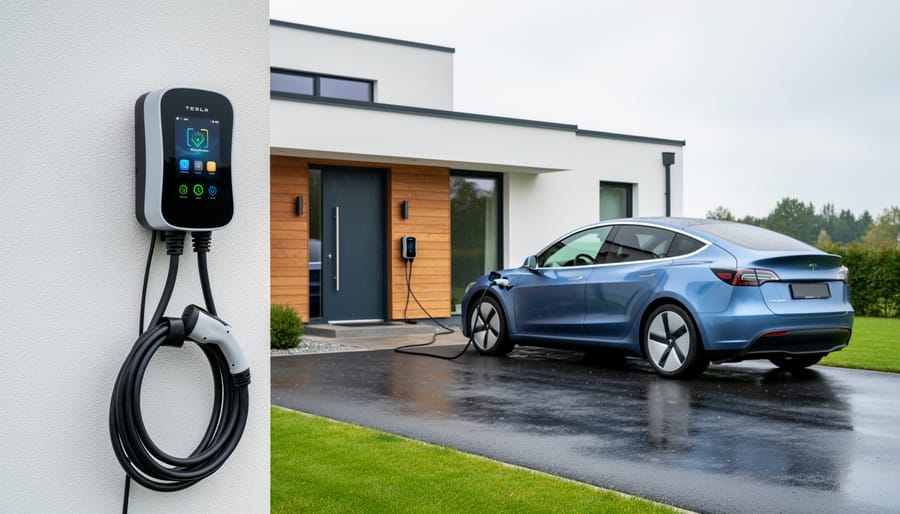
Your home’s electrical panel has a finite capacity, typically 100 to 200 amps for most Ontario residences. An electric vehicle can draw 30 to 48 amps while charging, a substantial portion of your available power. Without automatic load management, plugging in your EV while the dryer runs, the oven heats up, and the air conditioner cycles on could push your system past its safe limit, tripping breakers or worse.
Smart charging stations with automatic load management solve this problem by continuously monitoring your home’s real-time electrical consumption. The system measures how much power your household is currently using, then dynamically adjusts the charging rate to stay within your panel’s capacity. If demand spikes, the station automatically dials back charging speed. When demand drops, say, after dinner when appliances shut off, it ramps back up to maximum safe speed.
Here’s a typical scenario: You arrive home at 6 PM on a January evening and plug in your EV. Your furnace is running, you start cooking dinner with the electric stove, and someone begins a load of laundry. A basic charger would pull its full 40 amps regardless, potentially overloading your 100-amp panel. A smart station recognizes your home is already drawing 65 amps and reduces EV charging to 25 amps, keeping your total consumption safely at 90 amps. Later, when you turn off the stove and dryer, it automatically increases charging back to 40 amps.
This feature becomes especially valuable if you have a solar energy system, where the charger can balance between solar production, grid power, and household loads without exceeding safe thresholds.
2. Ground Fault Protection: Built-In GFCI Safety
Ground fault protection ranks among the most critical safety features in any EV charging station, especially for Canadian installations. A ground fault circuit interrupter (GFCI) continuously monitors the electrical current flowing to your vehicle, measuring the balance between the hot and neutral wires. If even a tiny imbalance occurs, as little as 5 milliamps, roughly the current from a small nightlight, the GFCI recognizes that electricity is leaking somewhere it shouldn’t go and cuts power in as fast as 1/40th of a second. That split-second response prevents electric shock before you could even feel it.
Why does this matter so much in Ontario? Our climate creates conditions that increase ground fault risk. Spring melt brings moisture into garages and driveways. Summer humidity condenses on cold surfaces. Winter road salt corrodes connections and creates conductive paths where they shouldn’t exist. A charging cable lying in a puddle, a worn connector exposed to freezing rain, or condensation inside a junction box can all create dangerous leakage paths. Smart charging stations with built-in GFCI protection monitor for these conditions continuously, not just when you plug in. If moisture penetrates a connection or insulation degrades, the system detects the problem and stops the flow of electricity before anyone touches the equipment. This redundant layer of protection goes beyond the GFCI breaker in your electrical panel, providing vehicle-level safety right at the charging point.
3. Temperature Monitoring: Stops Overheating Before It Starts
Smart charging stations equipped with temperature monitoring use multiple thermal sensors to track heat levels throughout the charging cycle. These sensors constantly measure the temperature inside the unit, at connection points, and along the charging cable itself. If any component starts running too hot, the station automatically dials back the charging current or shuts down completely before dangerous conditions develop.
This protection matters year-round in Ontario. During July and August, when garage temperatures can spike above 35°C, basic chargers may push components beyond safe operating limits without you knowing. Smart stations detect rising heat and throttle power delivery to keep everything within manufacturer specifications. In winter, the same sensors identify when extreme cold affects charging efficiency, allowing the system to adjust accordingly rather than straining connections.
The technology prevents the two most common overheating scenarios: sustained high-amp charging that gradually heats cables and connections, and poor contact points that create resistance hotspots. Both can damage your vehicle’s charging port, degrade the station itself, or in severe cases, create fire hazards. Temperature monitoring catches these issues immediately, not after damage occurs.
Most smart stations display temperature data in their companion apps, so you can verify everything’s operating normally. Some models even record temperature trends over time, helping identify developing problems like aging connections before they become safety concerns.
4. Surge Protection: Shields Your EV from Power Spikes
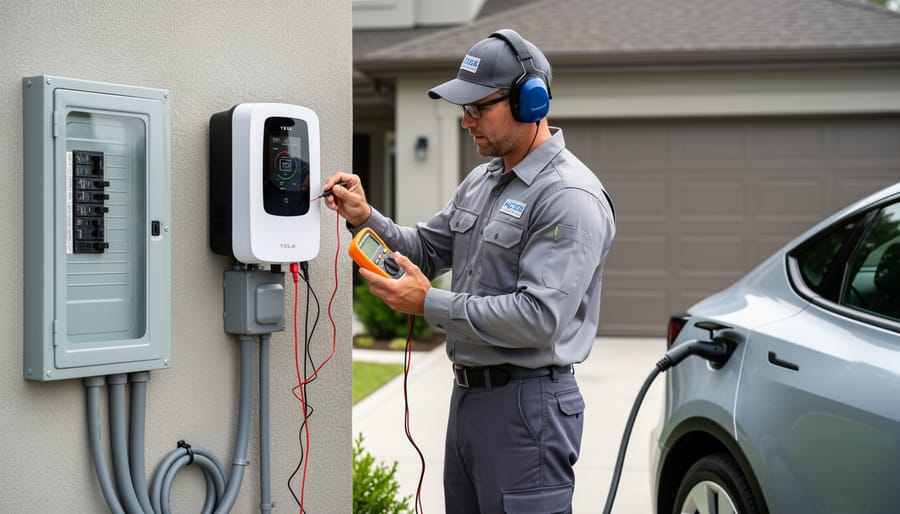
Your EV’s battery and onboard computer systems represent a significant investment, and both are vulnerable to sudden voltage spikes that can occur without warning. Smart charging stations with integrated surge protection act as a shield between the grid and your vehicle, absorbing and diverting excess voltage before it reaches your EV’s sensitive electronics.
Voltage spikes happen more often than most homeowners realize. Lightning strikes on nearby power lines can send surges through your electrical system even if your home isn’t directly hit. Utility companies routinely switch loads between substations, creating brief voltage fluctuations. Power restoration after an outage often brings a momentary spike as the grid stabilizes.
For Ontario homes with solar installations, surge protection becomes even more critical. The bidirectional flow of electricity as your system feeds excess power back to the grid or draws from it creates additional opportunities for voltage irregularities. A smart charging station monitors incoming power quality continuously and can instantly disconnect your vehicle if it detects dangerous surges.
The protection works in milliseconds, far faster than a human could react. When a spike occurs, internal components called metal oxide varistors absorb the excess energy and redirect it safely to ground. Your EV keeps charging normally, unaware that its electronics just avoided potential damage worth thousands of dollars in repairs.
5. Real-Time Diagnostics and Alerts: Know What’s Happening
Your smart charging station acts as a constant guardian, watching for electrical problems you’d never notice until something goes wrong. Modern stations send instant alerts to your phone when they detect wiring issues, loose connections, or abnormal electrical behaviour. Instead of discovering a problem weeks later through reduced charging performance or a tripped breaker, you get a notification the moment something’s off.
These diagnostic systems monitor dozens of parameters every second. When a sensor detects unsafe conditions, whether it’s a voltage spike from the grid, resistance changes indicating a corroding connection, or irregular current flow suggesting internal faults, the station either adjusts its operation or shuts down entirely while notifying you of the specific issue. Some advanced models even distinguish between minor concerns that need attention soon and critical faults requiring immediate action, like a high voltage disconnect scenario.
Common alert types you’ll receive include:
- Connection errors when the charging cable isn’t properly secured or contacts are dirty
- Ground fault warnings indicating potential electrical leakage to unintended pathways
- Temperature warnings when internal components or cables exceed safe operating limits
- Voltage irregularities signaling grid problems or issues with your home’s electrical supply
- Scheduled maintenance reminders to inspect connections and ensure continued safe operation
This visibility transforms your relationship with home charging from hoping everything works correctly to knowing with certainty that it does. You catch deteriorating connections before they create heat buildup, identify wiring problems before they damage your vehicle’s battery, and address code violations before an inspector finds them. The peace of mind comes from never being surprised by an electrical safety issue you could have prevented.
6. Scheduled Charging with Time-of-Use Optimization
Scheduled charging does more than cut your electricity bill, it protects your home’s electrical system from dangerous overload conditions. When your smart charging station pulls power during off-peak hours (typically 7 p.m. to 7 a.m. in Ontario), your dryer, oven, air conditioning, and water heater aren’t competing for capacity. That means your main electrical panel and branch circuits aren’t straining under compounded loads that can cause overheating, breaker trips, or worse.
Smart stations let you program charging windows that align with Ontario’s time-of-use rates, automatically starting your EV charge when demand drops and rates fall to off-peak pricing. The safety benefit comes from isolating your charging load from your household’s typical high-demand periods. Instead of adding a 7.2 kW charging draw on top of dinner prep and laundry, you’re charging when the house is quiet and electrical demand is minimal.
For homes with net metering Ontario agreements or solar battery storage scheduled charging becomes even smarter. Your station can prioritize charging from stored solar energy or schedule grid draws during times when peak production hours have already banked credits. This coordinated approach keeps electrical loads balanced, prevents sudden demand spikes that stress wiring and connections, and ensures your charging station operates within safe parameters your electrical system can handle consistently.
7. Weather-Resistant and Certified Enclosures
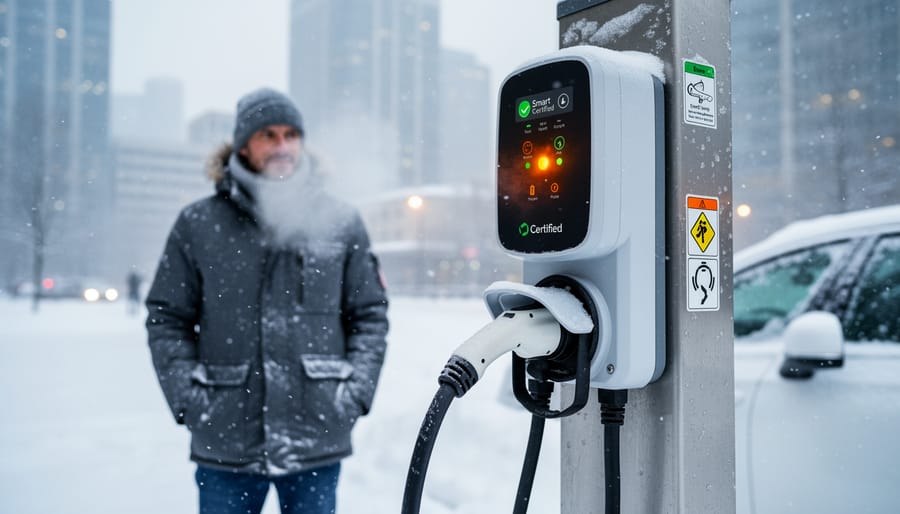
Ontario’s weather extremes, from humid summer thunderstorms to sub-zero winter ice, demand charging stations built to withstand it all. A NEMA 3R or NEMA 4 rating isn’t just a specification; it’s your assurance that rain, snow, dust, and UV exposure won’t compromise your station’s electrical integrity. These weatherproof enclosures seal out moisture that could cause short circuits and prevent ice buildup that might damage internal components.
CSA certification takes this protection further by confirming your station meets Canadian electrical safety standards specific to our climate and building codes. Unlike basic weather covers, smart charging stations integrate environmental sensors that actively respond to conditions: reducing power output during extreme cold to prevent cable stiffness issues, or shutting down temporarily if moisture detection indicates a compromised seal.
This matters when you’re running advanced features like V2H charging where your EV acts as backup power for your home, a function that demands flawless weatherproofing since bidirectional power flow increases electrical complexity. Quality enclosures also resist UV degradation that causes cheaper plastic housings to crack and fail after a few Canadian summers.
A properly certified, weather-resistant station doesn’t just survive Ontario’s seasons, it maintains safe operation through them, protecting both your investment and your home’s electrical system regardless of what the forecast brings.
Integrating Your Smart Charging Station with Solar Energy
When you pair a smart charging station with your home solar system, you’re not just charging with clean energy, you’re creating a safer, more efficient electrical ecosystem. Smart stations equipped with solar integration can automatically detect when your panels are producing excess power and direct that energy to your EV first, reducing the load on your electrical panel and minimizing grid dependency.
The real safety advantage comes from intelligent load balancing. Your smart charger communicates with your solar inverter to ensure you’re never pulling maximum power from both the grid and your solar system simultaneously, which could stress your home’s electrical infrastructure. During transitions, when clouds roll in or your panels stop producing at sunset, the station smoothly shifts to grid power without creating voltage spikes or electrical disruption.
For Ontario homeowners with net metering agreements, this coordination is especially valuable. Your charging station can prioritize solar energy during peak production hours, storing that energy in your vehicle’s battery rather than sending it back to the grid at lower compensation rates. The system monitors your home’s total electrical load in real-time, ensuring charging never competes with essential household circuits.
CANBIO’s network of certified installers understands how to configure both solar and EV charging systems to work together seamlessly, ensuring your setup meets Ontario electrical code requirements while maximizing your investment in renewable energy.
Common Questions About Smart Charging Station Safety
Before you invest in a smart charging station, you’ll likely have practical questions about what installation involves and how these systems work day-to-day. Here are the answers to concerns we hear most often from Ontario homeowners.
Do I need an electrical panel upgrade for a smart charging station?
Many modern homes can support a Level 2 charger without an upgrade, but older panels with limited capacity often need a service increase. A licensed electrician will assess your current panel’s available amperage and recommend whether an upgrade is necessary for safe operation.
Can I install a smart charging station myself?
No. Ontario’s electrical code requires a licensed electrician to install any 240-volt charging equipment, and DIY installation voids your warranty while creating serious safety and insurance risks. Professional installation also ensures proper permitting and inspection.
How do smart features comply with Ontario electrical code?
Smart charging stations that carry CSA certification already meet Canadian electrical code requirements. Features like built-in GFCI protection and automatic shutoff actually exceed basic code minimums, providing additional safety layers that inspectors recognize and approve.
What happens to my charging station during a power outage?
The station stops charging immediately when grid power fails. Once power returns, most smart models automatically resume charging at your pre-set schedule or send you a notification to restart manually, preventing unexpected loads on your system.
How often does the charging station need inspection?
After the initial installation inspection, most manufacturers recommend an annual check by a qualified electrician to examine connections, test safety functions, and ensure the unit operates within specifications. Your smart station’s diagnostic features will alert you if problems develop between inspections.
These questions reflect real concerns about doing things the right way. The smart features we’ve covered work best when paired with professional installation that accounts for your home’s specific electrical situation. Working with certified installers who understand both the technology and local requirements means you get answers tailored to your property, not generic advice.
Protecting your home and EV investment starts with choosing the right technology and the right installation team. These smart safety features work together to create multiple layers of protection, automatically monitoring conditions and responding to potential hazards before they become real problems. That’s genuine peace-of-mind.
But even the most advanced charging station won’t perform safely if it’s improperly installed. Ontario’s electrical code requirements exist for good reasons, and your home’s unique electrical setup, whether you have solar panels, an older service panel, or specific circuit limitations, demands expertise that goes beyond following manufacturer instructions.
CANBIO connects Ontario homeowners with certified installers who understand both the technology and your local electrical requirements. Our network includes professionals experienced in EV charging, solar integration, and electrical safety compliance across the province. They’ll assess your home’s capacity, recommend the right equipment, and ensure every wire meets code.
Ready to charge safely at home? Get quotes from qualified installers in your area through CANBIO’s network. You’ll receive expert guidance tailored to your home’s electrical system, transparent pricing, and installation backed by proper permits and inspections. Start with confidence, your EV charging solution should protect what matters most.
Leave a Reply