

Upgrading your Ontario home with solar panels can slash your electricity bills by 50-80% while significantly improving whole-home energy efficiency and electrical safety, including protection for high-draw appliances like your dryer. The process involves a certified solar installer assessing your roof, designing a system sized to your consumption patterns, integrating the installation with your existing electrical panel, and ensuring all circuits meet current safety standards for 2026.
Here’s why this matters now. Ontario homeowners face rising electricity rates and increasing awareness that outdated electrical systems pose real fire risks, especially when paired with energy-hungry appliances. When you bring in a solar professional to evaluate your home’s energy profile, they examine not just your roof but your entire electrical infrastructure. That assessment often reveals overloaded circuits, aging wiring, or inadequate ventilation around heat-generating equipment. These discoveries protect you before problems escalate. You can understand how electrical and ventilation safety work together to protect your home when you learn more about professional dryer vent services.
The right solar upgrade does more than add panels. It modernizes your electrical system, balances loads across circuits, and creates redundancy that keeps essential appliances running safely. For Ontario families, this means peace of mind alongside lower bills and a meaningful reduction in your carbon footprint. Local expertise matters here. Certified installers understand Ontario’s climate, building codes, and grid-tie requirements, ensuring your investment performs reliably through harsh winters and summer peaks.
What You’ll Need: Tools, Resources, and Preparation
Before installing solar panels on your Ontario home, you’ll need to gather specific documentation and complete several assessments. This preparation phase ensures your project runs smoothly and meets all provincial requirements while maximizing efficiency and safety benefits.
Start with a professional energy audit to establish your baseline consumption and identify where your home loses energy. These audits reveal how much power your major appliances draw, including your electric dryer, which often ranks among the top energy consumers. Understanding your current usage patterns helps size your solar system correctly and highlights opportunities for additional efficiency improvements before installation.
Your roof needs a thorough structural assessment. Ontario’s climate brings heavy snow loads and ice, so you’ll need confirmation that your roof can support panel weight and has at least 15 years of remaining lifespan. A roof in poor condition should be replaced before solar installation to avoid costly removal and reinstallation later.
Compile the following essentials before moving forward:
- Recent utility bills (12 months) showing seasonal usage patterns
- Energy audit report with appliance-by-appliance breakdown
- Roof assessment confirming structural integrity and orientation
- Current electrical panel specifications and available capacity
- Property survey or deed to verify setback requirements
- List of major appliances with model numbers and wattage ratings
- Financial documents for rebate applications and financing options
- Municipal permit requirements for your specific jurisdiction
Connect with certified installers early in your planning. Ontario requires licensed contractors for solar work, and CANBIO maintains a directory of vetted local professionals who understand regional building codes and utility interconnection procedures. These experts can review your documentation, identify any electrical panel upgrades needed to safely handle solar input alongside existing loads, and provide accurate cost estimates.
Document your dryer specifications carefully. If you have an electric dryer, note its voltage, amperage, and whether it operates on a dedicated 240-volt circuit. This information helps installers ensure your upgraded electrical system handles both solar production and high-draw appliance operation without creating safety hazards or tripping breakers.
Safety Warnings and Electrical Considerations
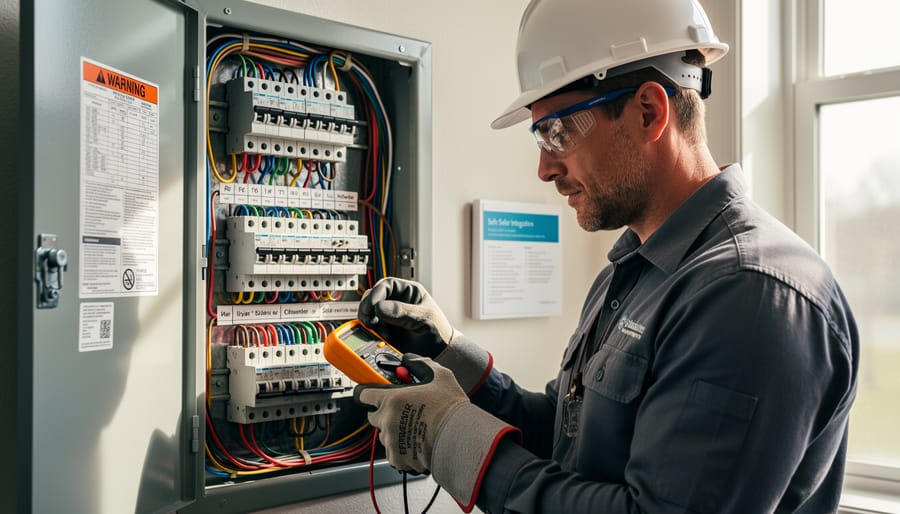
Solar panel installations involve significant electrical work and roof access, both carry serious risks if handled improperly. Working with live electrical circuits can result in shock, burns, or fatal electrocution, while improper roof mounting can lead to falls, structural damage, or leaks. These aren’t DIY projects, and attempting them without proper training and equipment puts you, your home, and your family at risk.
In Ontario, every solar installation must go through Electrical Safety Authority (ESA) inspection and approval before activation. Your utility company also requires a connection agreement and meter upgrade to handle bi-directional energy flow. Skipping permits or inspections creates serious liability issues, your insurance may deny claims for fire or electrical damage if the system wasn’t properly permitted and inspected.
Solar systems interact directly with your home’s electrical infrastructure, including the main panel where all circuits originate. High-draw appliances like electric dryers, water heaters, and air conditioners place substantial loads on your panel. Adding solar input without verifying adequate panel capacity can overload circuits, trip breakers repeatedly, or create dangerous overheating conditions. Many Ontario homes built before 2000 have 100-amp or 125-amp panels that need upgrading to safely accommodate solar systems.
Your certified installer will assess whether your panel requires expansion or replacement and will integrate critical safety equipment like a high voltage disconnect switch that allows emergency shutdown. They’ll also verify proper circuit protection for your dryer and other major appliances, ensuring the entire system operates within safe parameters. This professional evaluation is essential, it’s not just about making solar work, it’s about keeping your home electrically sound.
Step-by-Step: Installing Solar Panels for Home Energy Efficiency
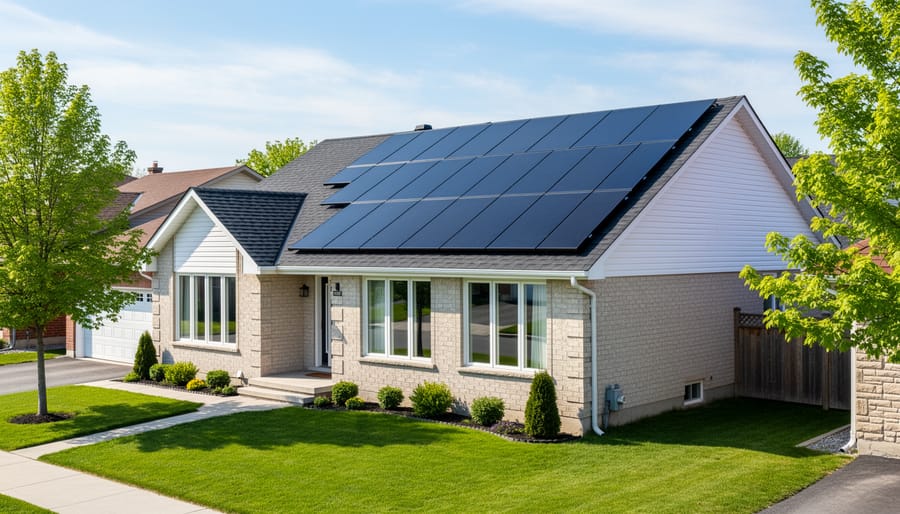
Step 1: Conduct a Home Energy Audit
Start with your utility bills from the past year, look for patterns in electricity consumption, particularly during peak hours when your dryer and major appliances run most often. An Ontario energy audit provides a detailed baseline, measuring where energy escapes (drafty windows, poor insulation) and which systems draw the most power. Your dryer typically accounts for 6-12% of household electricity use, so note how many loads you run weekly and whether you use heated drying cycles.
Document all major appliances with their wattage ratings found on manufacturer labels or your user manuals. Electric water heaters, HVAC systems, and kitchen appliances combine with your dryer to create your peak load profile. This inventory tells installers how large your solar array needs to be, undersizing means you won’t offset enough usage, while oversizing wastes money upfront.
Calculate your daily kilowatt-hour consumption by dividing your monthly bill total by 30, then add 20-25% to account for future needs and seasonal variations. Ontario’s winter months see reduced solar production precisely when heating and dryer use spike, making accurate demand forecasting critical for system design.
Step 2: Connect with Certified Solar Installers
Finding the right installer is crucial for a safe, efficient solar upgrade. Start with CANBIO’s certified installer directory, which lists professionals who meet Ontario’s licensing and safety standards. These installers understand provincial building codes, electrical requirements, and how solar systems interact with your home’s existing infrastructure, including high-load appliances like dryers.
Request quotes from at least three installers. A solid proposal should specify system size in kilowatts, panel and inverter brands with warranty details, projected energy production for your location, and a realistic installation timeline. Ask about their experience with homes similar to yours and whether they handle all permits and utility paperwork.
Compare proposals carefully. The lowest price isn’t always the best value, look for quality equipment, comprehensive warranties (typically 25 years for panels, 10-15 for inverters), and clear communication. Check references and verify certifications through the Electrical Safety Authority. A reputable installer will conduct a thorough site assessment, discuss panel capacity needs, and explain how your solar system will safely integrate with your electrical service and major appliances.
Step 3: Secure Permits and Approvals
Your installer will handle most permit paperwork, but you’ll need to provide property documents and sign authorization forms. In Ontario, expect your installer to secure a municipal building permit (typically 2-3 weeks) and submit an Electrical Safety Authority (ESA) connection authorization before any work begins. The utility interconnection agreement, like Toronto Hydro interconnection approval for city residents, can take 4-6 weeks, though rural utilities may process faster. Your responsibility: respond promptly to installer requests for documents, attend any required municipal inspections (rare but possible), and ensure property access for ESA inspection after installation. Delays often happen when homeowners don’t provide signed forms quickly, so keep your email checked. Most certified installers coordinate the entire approval chain as part of their service, but confirm what’s included in your contract before signing. Budget 6-8 weeks total from permit submission to final utility approval in major cities, less in smaller municipalities.
Step 4: Upgrade Your Electrical Panel if Needed
Your home’s electrical panel acts as the central nervous system for all power distribution. Before adding solar, a certified electrician must verify your panel can safely handle the combined load of solar input, everyday appliances, and high-draw items like electric dryers, which typically pull 5,000 watts or more.
Most Ontario homes built before 2000 have 100-amp panels. While technically functional, these older panels often lack the capacity for solar integration without creating safety risks. Modern solar systems require 200-amp service to accommodate bidirectional power flow, electricity coming from both the grid and your panels.
Warning signs you need an upgrade include frequent breaker trips, flickering lights when the dryer runs, or a panel with no available slots for new circuits. Installers will also check for aluminum wiring, outdated fuse boxes, or corrosion that compromises safety.
Panel upgrades typically cost $2,000-$4,000 in Ontario and require utility coordination. Your installer handles permits and scheduling, but expect one to two days of limited power during the work. This investment eliminates fire hazards and ensures your solar system operates at peak efficiency for decades.
Step 5: Install Solar Panels and Inverter System
Installation day typically begins with the crew arriving early to set up safety equipment and stage materials. Your certified installer will start by securing mounting hardware to your roof rafters, ensuring waterproof seals at every penetration point. The team then lifts and locks the solar panels into the racking system, working methodically across your roof section.
While roof work progresses, electricians run conduit from the panels down to your home’s electrical panel, often routing through your attic or along exterior walls. They’ll install the inverter, usually mounted near your main panel or in your garage, which converts the panels’ DC power into AC electricity your home can use. This inverter becomes the brain of your system, managing power flow and safety shutoffs.
Before activation, an electrical inspector verifies all connections meet Ontario Electrical Safety Code requirements, checking wire sizing, grounding, panel labeling, and disconnect switches. Your role is primarily observational: stay available for questions about access points, keep pets inside, and prepare to learn your system’s monitoring interface. Most residential installations complete in one to three days, weather permitting.
Step 6: Add Energy Storage (Optional but Recommended)
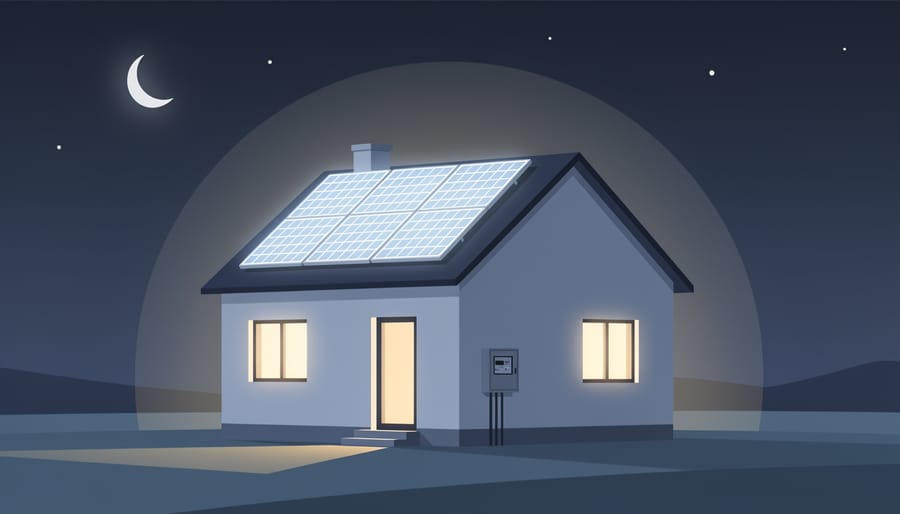
While not mandatory, adding solar battery storage to your solar system offers significant advantages for Ontario homeowners. Battery systems store excess solar energy generated during the day for use at night or during cloudy periods, maximizing your investment and reducing reliance on grid power during expensive peak hours.
For Ontario’s climate, batteries provide crucial backup power during winter storms and grid outages, keeping essential appliances like your furnace, refrigerator, and even your dryer running when you need them most. Popular options like the Tesla Powerwall integrate seamlessly with most solar systems and offer monitoring capabilities that help you track energy usage patterns.
Integration requires additional electrical work and typically adds $10,000 to $15,000 to your project cost, but many homeowners find the energy independence and peace of mind worth the investment. Discuss storage capacity needs with your installer based on which appliances you want to power during outages and your typical evening energy consumption. Some Ontario utilities also offer time-of-use rates that make battery storage more economically attractive by letting you avoid expensive peak pricing.
Verification and Next Steps: Ensuring Your System Works Properly
Once your solar panels are installed, verification ensures the system operates safely and efficiently alongside your home’s existing electrical infrastructure. This phase transforms a completed installation into a fully functional energy solution.
Your installer will conduct system commissioning, testing all electrical connections, inverter functionality, and safety shutoffs. They’ll verify proper grounding, confirm circuit protection operates correctly, and ensure the system communicates with your monitoring platform. This is when you’ll see your first power generation readings.
Utility meter activation follows commissioning. Your local utility will install or reconfigure your meter to track both energy consumption and solar production. This enables net metering in Ontario allowing you to receive credits for excess power sent back to the grid. The activation process typically takes one to three weeks after installation completion.
- Confirm inverter display shows active power generation during daylight hours
- Verify monitoring app or web portal displays real-time production data
- Check that utility meter registers bidirectional flow (consuming and exporting)
- Test that major appliances, including your dryer, operate normally with solar active
- Review first week’s production against installer’s performance estimate
- Confirm no unusual sounds, vibrations, or heat from electrical panel or inverter
Set performance benchmarks based on your system size and seasonal expectations. A typical 8 kW system in Ontario generates 25-35 kWh daily in summer, dropping to 10-15 kWh in winter. Your monitoring system should track energy flow to individual circuits if you’ve installed circuit-level monitoring, this reveals exactly how much power your dryer and other high-draw appliances consume versus what your panels produce.
Document your baseline consumption patterns during the first month. Compare pre-solar and post-solar utility bills to quantify savings, and watch for any irregularities in appliance performance that might indicate electrical issues needing attention.
The Connection Between Solar Upgrades and Dryer Safety
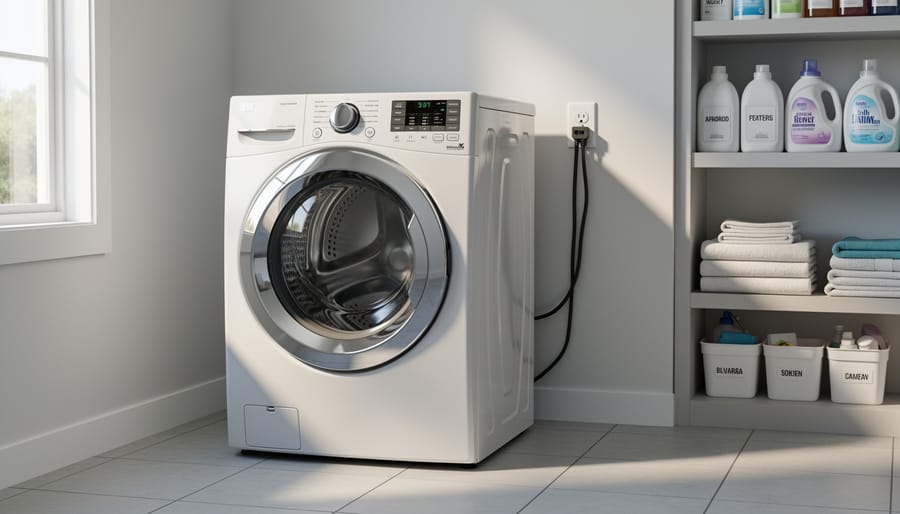
Solar upgrades do more than generate clean energy, they fundamentally change how your home manages electrical demand, creating a safer environment for power-hungry appliances like electric dryers. By offsetting grid consumption during peak usage times, solar systems reduce the strain on your electrical panel and circuits, which translates to less heat buildup in wiring and connections. This matters especially in older Ontario homes where electrical infrastructure wasn’t designed for today’s appliance loads.
The data your solar inverter collects reveals more than just energy production. When your dryer suddenly pulls 20-30% more power than usual, it often signals restricted airflow from clogged vents or lint accumulation in the duct system, both leading causes of dryer fires. Without monitoring, these changes go unnoticed until a problem escalates. Solar systems with smart monitoring apps let you establish baseline consumption levels for your dryer and alert you to anomalies worth investigating.
Battery backup adds another layer of safety. Mid-cycle power interruptions can leave clothes bunched against heating elements or cause control boards to malfunction when power returns unexpectedly. Solar battery systems provide seamless power during brief outages, ensuring your dryer completes its cycle safely without the thermal stress of repeated start-stop events. This continuity protects both your appliance investment and your household safety while reinforcing the efficiency gains your solar upgrade delivers.
Common Questions About Solar Energy Upgrades in Ontario
What’s the typical cost and payback period for solar upgrades in Ontario in 2026?
Residential solar installations in Ontario typically range from $15,000 to $30,000 after available incentives, with payback periods of 8 to 12 years depending on system size, energy usage, and electricity rates. Homeowners who maximize provincial and federal rebates often see faster returns, especially with rising utility costs.
How do solar panels perform during Ontario winters?
Solar panels actually work more efficiently in cold temperatures and continue generating power throughout winter, though shorter days and snow cover reduce overall output. Most Ontario systems produce 60-70% of their annual energy during the sunnier months from April through September, making battery storage valuable for winter resilience.
Will solar panels work safely with my existing electrical system and high-draw appliances?
Yes, when installed by certified professionals who properly assess your electrical panel capacity and circuit protection. Your installer will ensure the system integrates safely with existing loads, including dryers and other major appliances, and recommend panel upgrades if needed to handle the combined demand.
What rebates and incentives are available for Ontario homeowners?
Ontario residents can access federal programs like the Canada Greener Homes Grant (up to $5,000) and the interest-free Canada Greener Homes Loan (up to $40,000). Some municipalities offer additional property tax incentives, and financing options through certified installers can further reduce upfront costs.
Beyond financial considerations, many homeowners wonder about ongoing maintenance requirements. Solar panels need minimal upkeep, an annual inspection and occasional cleaning to remove debris or snow buildup. Ontario’s weather naturally rinses panels during rain, and most systems include 25-year performance warranties that cover efficiency degradation. Your monitoring system will alert you to any operational issues, making it easy to maintain peak performance.
Compatibility concerns rarely pose obstacles. Solar systems adapt to virtually any home style, roof type, and electrical configuration. If your roof needs replacement within five years, handle that first. Otherwise, installers work with asphalt shingles, metal roofing, and even flat roofs using specialized mounting systems. Older homes may require electrical panel upgrades to safely integrate solar production with existing circuits, but this enhances overall home safety and adds value.
The impact on property value matters to most homeowners. Studies consistently show that solar installations increase home resale values, with buyers willing to pay premiums for lower operating costs and energy independence. In Ontario’s competitive housing market, solar panels differentiate properties and appeal to environmentally conscious buyers. Plus, the energy monitoring capabilities help identify inefficient appliances, giving you data to optimize consumption and catch potential safety issues before they escalate.
Upgrading your Ontario home with solar energy delivers measurable returns across four key areas: lower monthly electricity costs, enhanced electrical safety through reduced grid dependence, a smaller carbon footprint, and increased resale value. Homeowners who complete solar installations typically see immediate reductions in utility bills while enjoying the peace of mind that comes with properly distributed electrical loads and modern safety features.
The process becomes straightforward when you work with qualified professionals who understand Ontario’s specific climate, regulatory landscape, and electrical codes. From your initial energy audit through final system activation, certified installers handle the technical complexities while you focus on the benefits.
Ready to take that first step? Connect with CANBIO-verified solar installers who bring local expertise and proven track records to every project. These professionals understand how to maximize efficiency in Ontario’s conditions, navigate municipal requirements smoothly, and design systems that complement your home’s existing infrastructure, including safe operation alongside high-draw appliances.
Solar upgrades represent more than an energy decision. They’re an investment in your home’s long-term performance, safety, and environmental responsibility. The expertise and support you need are already available through trusted local professionals committed to sustainable solutions for Ontario communities.
Leave a Reply