
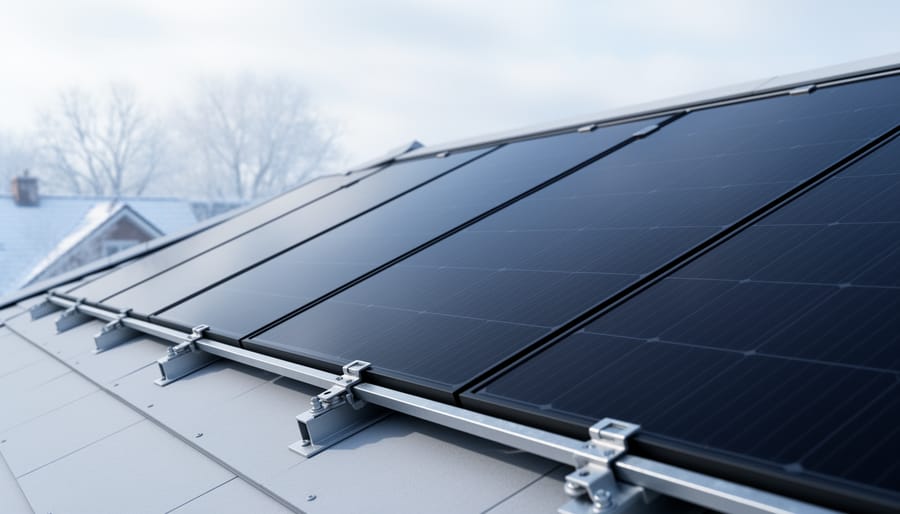
Solar PV panel capacity refers to the maximum amount of electrical power a solar panel or system can generate under ideal conditions, measured in watts (W), kilowatts (kW), or megawatts (MW). This rating tells you the peak output your panels are designed to produce when sunlight hits them at full strength.
Understanding capacity matters because it directly affects how much electricity your system can generate and whether it will meet your energy needs. A home in Ontario typically requires between 5 kW and 10 kW of solar capacity to offset most household electricity consumption, while commercial installations often need much more. The capacity you choose shapes everything from your upfront investment to your long-term energy savings and environmental impact.
Capacity isn’t just a single number on a product sheet. It’s influenced by panel efficiency, the number of modules you install, how they’re wired together, and real-world factors like shading, roof orientation, and Ontario’s seasonal sunlight variations. What a panel can produce in a laboratory rarely matches what it delivers on your rooftop during a cloudy November afternoon.
This guide breaks down what solar PV capacity really means in practical terms. You’ll learn how capacity is measured, the difference between rated capacity and actual output, what size system makes sense for different applications, and how to translate capacity numbers into realistic expectations for your energy production. Whether you’re sizing a residential rooftop array or planning a commercial installation, you’ll walk away with the knowledge to make confident, informed decisions about your solar investment.
What Solar PV Panel Capacity Means
When you look at a solar panel’s spec sheet, the most important number you’ll see is its capacity rating, the maximum amount of electricity that panel can produce. This rating is measured in watts (W) or kilowatts (kW), and it tells you the panel’s power output under perfect laboratory conditions.
Think of capacity like the horsepower rating of a car engine. A 400W solar panel can generate up to 400 watts of electricity when the sun is shining directly on it at the ideal angle, with no clouds or shade. Most residential panels in Ontario range from 300W to over 500W, while a complete home system might have a total capacity of 5kW to 10kW (that’s 5,000 to 10,000 watts).
Understanding a few key terms helps make sense of these numbers:
- Watt (W)
- The basic unit measuring electrical power. One watt is a small amount, your smartphone charger uses about 5-20 watts.
- Kilowatt (kW)
- One thousand watts. Most home solar systems are sized in kilowatts, typically ranging from 5kW to 12kW in Ontario.
- Watt-peak (Wp)
- The maximum power output a panel can achieve under ideal conditions, often used interchangeably with the capacity rating.
- Nameplate Capacity
- The official capacity rating stamped on the panel, representing its tested peak performance.
- Standard Test Conditions (STC)
- The controlled laboratory settings (25°C temperature, specific light intensity and angle) used to determine a panel’s official capacity rating.
Here’s what this means practically: if you have ten 400W panels, your system has a total capacity of 4kW. That doesn’t mean you’ll always get exactly 4,000 watts, actual output varies with weather, season, and time of day, but it gives you a reliable baseline for comparing panels and sizing your system to meet your energy needs.
How Solar Panel Capacity Works
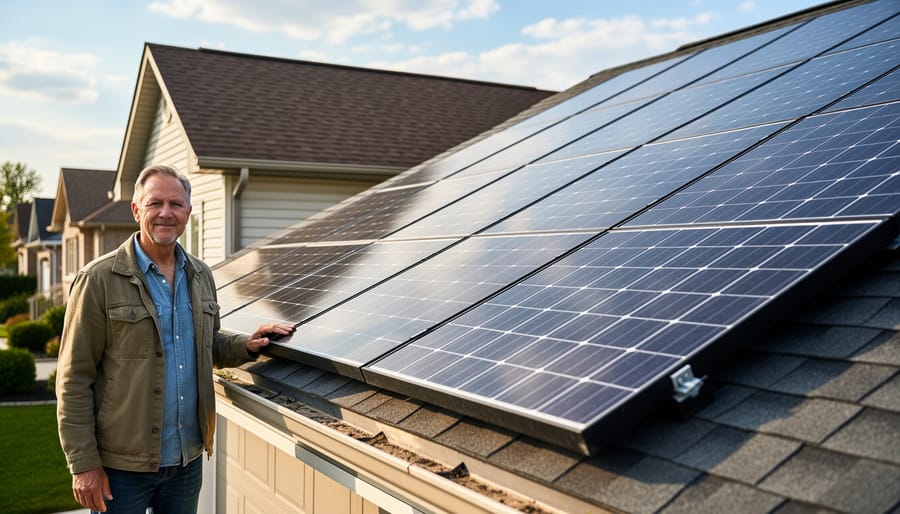
When sunlight reaches your solar panels, photovoltaic cells inside convert that light energy into direct current (DC) electricity. Each cell contains semiconductor materials, typically silicon, that release electrons when photons strike them. These free electrons flow through the cell’s circuit, creating an electrical current that feeds into your home’s electrical system after passing through an inverter that converts DC to usable AC power.
The capacity rating on a solar panel represents its maximum electrical output under perfect laboratory conditions. Manufacturers test panels under what’s called Standard Test Conditions: 1000 watts of light per square metre, a cell temperature of 25°C, and an air mass of 1.5. A panel rated at 400W can produce 400 watts of power when these ideal circumstances align perfectly. Think of it like a car’s advertised fuel economy, the number reflects optimal performance, not necessarily what you’ll experience every day.
Real-world output rarely matches rated capacity because conditions in Ontario constantly change. Your panels might generate their full capacity on a crisp, clear spring morning when temperatures are moderate and sunlight is strong. But on a hazy summer afternoon when panels heat up to 60°C, output drops because silicon cells become less efficient at higher temperatures. Cloud cover reduces incoming light, further lowering production below the rated level.
The amount of usable sunlight your panels receive throughout the year depends heavily on peak sun hours which measure how many hours of full-strength sunlight your location gets daily. Southern Ontario typically receives 3-4 peak sun hours in winter versus 5-6 in summer, directly affecting how much electricity your panels generate across seasons. This Ontario solar resource variation explains why your January production looks different from your July output.
Panel angle and orientation matter too. Panels facing south at Ontario’s optimal tilt angle capture more direct sunlight than those installed flat or facing east. Shade from nearby trees, chimneys, or neighbouring buildings blocks light from reaching cells, reducing output proportionally. Even partial shading can significantly impact performance if your system lacks optimizers or microinverters. Understanding winter solar output helps Ontario homeowners plan for seasonal production changes and set appropriate expectations for their investment.
Types and Components of Panel Capacity Ratings
Residential Panel Capacity Ranges
Most solar panels installed on Ontario homes in 2026 fall into two main capacity ranges. Standard panels typically generate between 300 and 400 watts, while newer high-efficiency options deliver 400 to 500 watts or more. The difference matters for your roof space and overall system design.
A typical 350-watt panel measures about 65 by 39 inches. If your roof has limited unshaded area, choosing higher-capacity panels means you need fewer of them to meet your home kWh usage. For instance, a household requiring a 7-kW system would need twenty 350W panels, but only fourteen 500W panels to achieve the same output. That’s six fewer mounting points, less racking hardware, and potentially lower installation labour.
Higher-capacity panels cost more per unit, but the total installed price often balances out because you’re buying and mounting fewer components. The typical residential panel wattage has climbed steadily as manufacturers improve cell efficiency, so what counted as premium capacity five years ago is now mainstream.
Your roof’s shape, orientation, and obstacles like vents or chimneys also influence which capacity range works best. A certified installer will measure your available space, calculate your energy needs, and recommend a panel capacity that maximizes production without cramming panels into poor locations. Sometimes a mix of capacities fits complex roof layouts better than sticking to a single model.
Commercial and Large-Scale Panel Capacities
Commercial solar installations typically deploy panels in the 400-600W range, notably higher than residential options. Businesses have more roof space and structural capacity, allowing them to maximize efficiency with larger, more powerful modules. A commercial warehouse might install 500W panels across thousands of square feet, creating systems measuring in the hundreds of kilowatts or even megawatts.
These installations also use different mounting configurations. Ground-mounted arrays and solar carports become viable options when you have parking lots or unused land. The panels connect in larger strings, feeding into commercial-grade inverters designed to handle substantial power loads.
For utility-scale solar farms, capacity considerations shift entirely. Developers select panels based on performance per acre, durability over 25-plus years, and compatibility with tracking systems that follow the sun. A single utility project might combine 50,000 panels rated at 500-600W each, generating enough capacity to power entire Ontario communities.
Businesses also face different electrical infrastructure requirements. Your building’s service panel, transformer capacity, and connection to the grid determine how much solar capacity you can integrate. Certified commercial installers assess these factors during initial site evaluations, ensuring your system size matches both your energy goals and your facility’s electrical capabilities.
System Capacity vs. Individual Panel Capacity
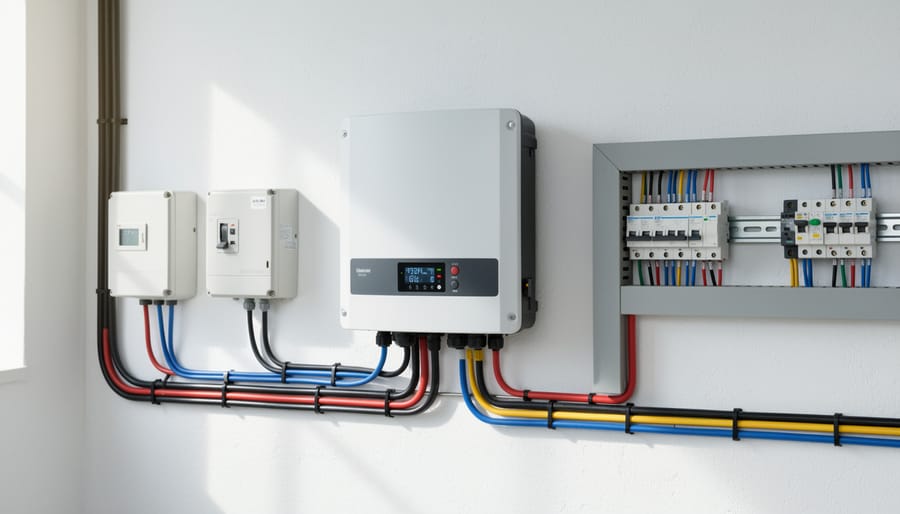
A single solar panel’s capacity, say, 400W, tells you how much electricity that one panel can generate. Your total system capacity, however, is the combined output of all your panels working together, and that’s the number that really matters for your home’s energy production.
When an installer designs a solar system, they multiply the number of panels by each panel’s wattage to calculate your system capacity. For example, 20 panels rated at 400W each create an 8 kW (8,000W) system. That total capacity determines how much electricity your array can produce and directly influences your solar payback timeline.
Several factors combine to determine your total system capacity:
- Number of panels your roof can accommodate
- Individual panel wattage (typically 300-500W for residential systems)
- Inverter capacity, which must match or slightly exceed your array output
- Array configuration and how panels are wired together
Ontario installers measure residential systems in kilowatts (kW), while larger commercial projects use megawatts (MW). A typical Ontario home might need a 6-10 kW system to offset most electricity usage, requiring 15-25 panels depending on their individual capacity. Understanding this relationship helps you balance roof space constraints with your energy goals, sometimes fewer high-capacity panels make more sense than cramming many lower-capacity ones onto limited area.
How Panel Capacity Is Used in Real Applications
Sizing Your Solar System
A certified solar installer starts by analyzing your electricity bills, typically the past 12 months, to understand your household’s average daily consumption measured in kilowatt-hours (kWh). In Ontario, a typical home uses 25-30 kWh per day, though this varies significantly based on home size, heating systems, and lifestyle habits.
Using this consumption data, installers calculate the system capacity needed to offset your energy use. For example, a household consuming 30 kWh daily would typically need a 7-9 kW system to cover most of their electricity needs. This translates to roughly 18-24 panels rated at 400W each, depending on available roof space and sun exposure.
The installer factors in Ontario’s seasonal sunlight variations, our winters receive far less solar radiation than summers, to ensure year-round performance. They’ll also account for efficiency losses from temperature, shading, and the need to occasionally clean solar panels to maintain optimal output.
Your specific system design balances several considerations: current energy consumption, future needs (like adding an EV or heat pump), budget constraints, and available roof area. A good installer presents options, perhaps a smaller 5 kW system to offset 60-70% of your usage, or a larger 10 kW array for complete energy independence plus surplus to bank as credits through Ontario’s net metering program.
Optimizing Roof Space and Energy Production
When your roof space is limited, panel capacity becomes a critical decision factor. Higher-capacity panels (400-500W+) let you generate more electricity from fewer panels, making them ideal for smaller roofs or properties with obstacles like skylights and vents. A 6 kW system might require 15 standard 400W panels or just 12 high-efficiency 500W panels, freeing up valuable roof real estate.
However, more lower-capacity panels can sometimes be the smarter choice. They’re typically less expensive per panel, spread your investment across multiple units (reducing the impact if one underperforms), and offer more flexibility in fitting around roof features. On larger roofs with simple layouts, this approach can lower your upfront costs while still meeting your energy needs.
Your certified installer will assess your roof’s usable area, orientation, and any shading to recommend the optimal balance. They’ll consider your budget, energy goals, and whether you might want to expand your system later. In Ontario, where roof space often battles with snow loads and structural considerations, this careful capacity planning ensures you get maximum energy production from every available square foot.
Calculating Return on Investment
Panel capacity directly determines how much electricity your system generates, and therefore how much money you save. A higher-capacity system produces more kilowatt-hours (kWh) annually, offsetting more of your utility bills. In Ontario, where residential electricity rates average $0.10, $0.15 per kWh (depending on time-of-use pricing), a 10 kW system generating roughly 12,000 kWh per year could save you $1,200, $1,800 annually. Over a typical 25-year panel lifespan, that’s $30,000, $45,000 in savings. Factor in rising electricity costs and available incentives, and the payback period for properly-sized capacity often falls between 8-12 years, making solar a sound long-term investment for Ontario households and businesses alike.
What Affects Your Panels’ Actual Capacity Performance
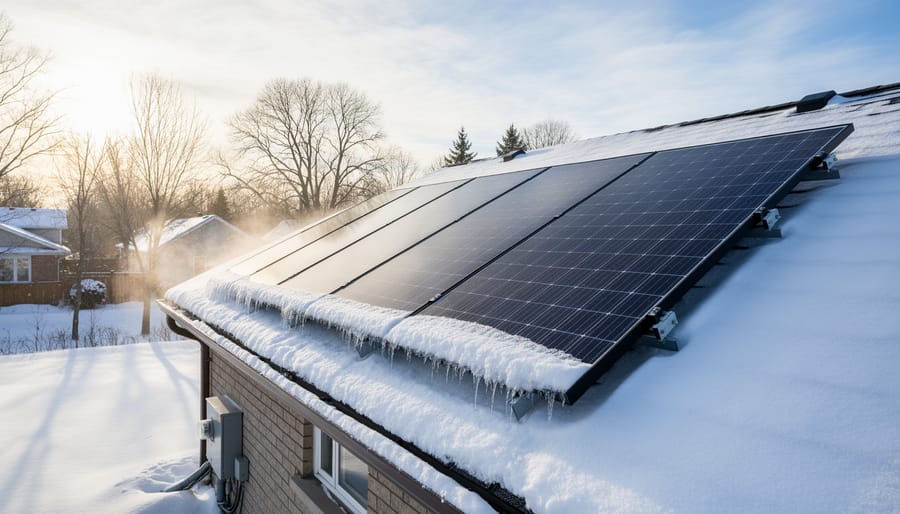
Your solar panels carry a nameplate capacity rating, say, 400W, but real-world conditions in Ontario mean they won’t hit that peak every hour of every day. Understanding what affects actual performance helps set realistic expectations and shows why proper installation matters.
Temperature and Seasonal Variations
Solar panels perform best in cool, bright conditions. While a sunny winter day might seem ideal, Ontario’s summer heat actually reduces panel efficiency. For every degree Celsius above 25°C, most panels lose roughly 0.3-0.5% of their rated capacity. On a scorching 35°C July afternoon, your panels might operate at 95-97% of their spec sheet rating, still productive, but slightly below peak. Conversely, crisp autumn days with bright sun often deliver excellent output.
Key Factors Affecting Real-World Capacity
Several elements combine to influence how close your panels get to their rated capacity:
- Temperature: Heat reduces efficiency while cold, bright conditions boost performance
- Shading: Even partial shade from trees, chimneys, or neighbouring buildings can significantly cut output
- Dirt and snow accumulation: Dust, pollen, leaves, or Ontario’s winter snow block sunlight from reaching cells
- Panel degradation: Panels gradually lose 0.5-1% capacity per year as materials age
- Inverter efficiency: Converting DC to AC power involves small losses, typically 3-5%
- Installation quality: Poor mounting, wiring, or ventilation undermines long-term performance
Orientation and Tilt Considerations
In Ontario, south-facing panels tilted between 30-40 degrees typically capture the most annual sunlight. East or west orientations still work but may produce 10-20% less energy overall. A flat roof installation or extreme tilt angles reduce how much direct sunlight hits the panels, lowering actual output compared to the rated capacity.
Seasonal sun angles shift dramatically at Ontario’s latitude. Your panels receive more intense, direct light during long summer days but face lower sun angles and shorter daylight hours in winter, meaning capacity utilization varies month to month even when the panels themselves haven’t changed.
Certified local installers account for these regional variables when designing your system, ensuring realistic production estimates rather than optimistic claims based solely on nameplate ratings.
Common Questions About Solar Panel Capacity
When Ontario residents start researching solar energy, certain questions about panel capacity come up again and again. Here are clear answers to help you navigate this important aspect of solar system design.
Does higher capacity always mean better?
Not necessarily. While higher-capacity panels produce more power per panel, they typically cost more upfront. The “best” capacity depends on your roof space, energy needs, and budget, sometimes more moderate-capacity panels offer better value for your specific situation.
How much capacity do I need for my home?
Most Ontario homes use between 8,000 and 11,000 kWh annually, which typically requires a 6-8 kW system capacity. A certified installer will review your actual electricity bills and roof characteristics to recommend the right size for your household.
Can I add more capacity later?
Yes, solar systems can often be expanded if you have additional roof space and your electrical panel can handle the increased production. Planning for potential future expansion during initial design makes later additions easier and more cost-effective.
What’s the difference between capacity and efficiency?
Capacity measures total power output in watts, while efficiency measures how well a panel converts sunlight into electricity (expressed as a percentage). A panel can have high capacity but moderate efficiency, or vice versa, both metrics matter when choosing panels.
One misconception we often hear is that capacity ratings reflect what panels produce every hour they’re in sunlight. Remember, the rated capacity represents peak performance under ideal laboratory conditions. Your panels will hit that peak only during Ontario’s brightest summer days when the sun is perfectly positioned. Most of the time, actual output will be lower, but that’s completely normal and accounted for in professional system design.
Another common worry is whether panel capacity degrades significantly over time. Quality panels do experience gradual capacity loss, typically around 0.5% per year. After 25 years, your panels might operate at about 85-90% of their original capacity, still producing substantial clean energy for your home.
Some homeowners wonder if they should maximize capacity to future-proof against rising electricity costs. While installing slightly more capacity than you currently need can be smart, drastically oversizing your system may not make financial sense. Ontario’s net metering programs have limits, and banks of unused production don’t provide additional value. Work with your installer to find that sweet spot between current needs and reasonable future growth.
Understanding solar PV panel capacity puts you in control of one of your most significant energy decisions. When you know what those watt ratings mean, how they translate to real electricity production on your Ontario property, and what factors shape your system’s performance, you’re equipped to choose a solar solution that genuinely fits your needs, not just today, but for decades ahead.
The right capacity sizing makes all the difference between a system that merely offsets some electricity costs and one that maximizes your roof space, your investment, and your environmental impact. Whether you’re a homeowner looking to reduce monthly bills or a business owner planning to cut operating costs while demonstrating sustainability leadership, matching your panel capacity to your actual consumption patterns ensures you get the performance you’re paying for.
CANBIO’s network of certified Ontario installers brings local expertise to this process. They understand how our seasonal sunlight patterns, temperature swings, and regional utility rates affect capacity planning. They’ll assess your specific property conditions, energy usage, and budget to design a system sized exactly right, no more, no less.
Every kilowatt of properly-sized solar capacity on Ontario rooftops moves us toward energy independence and a cleaner future. Your investment reduces grid demand during peak hours, cuts greenhouse gas emissions, and demonstrates that renewable energy makes both environmental and financial sense. That’s the power of understanding capacity and putting it to work.
Leave a Reply