
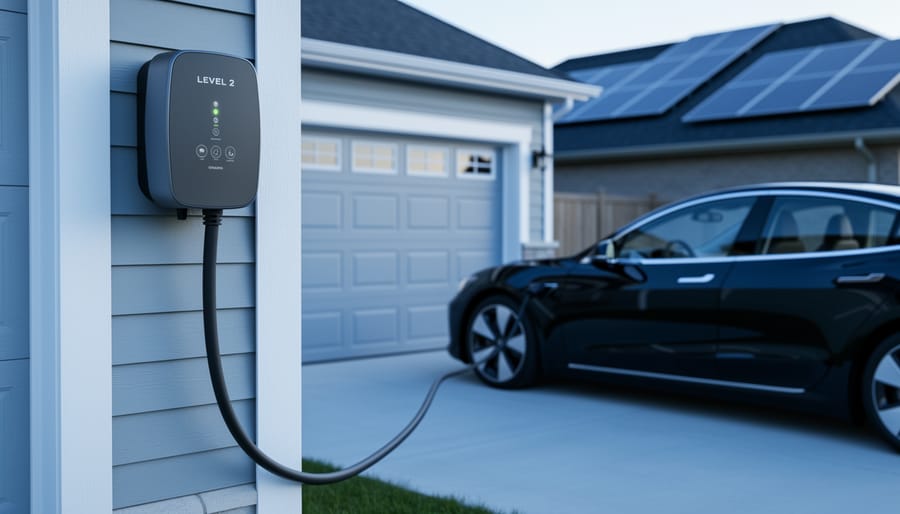
An EV charger with load management automatically balances power between your home, solar panels, and vehicle to prevent circuit overloads and keep electricity costs down. For Ontario homeowners with solar installations, this means you can charge your EV using clean energy without tripping breakers or paying demand charges when your system can’t keep up. The right load-managed charger communicates with your electrical panel to throttle charging speed based on real-time household demand and available solar production.
Most solar-equipped homes in Ontario need this coordination because a standard Level 2 charger draws up to 48 amps, enough to overwhelm many 100-amp or 200-amp service panels when running alongside air conditioning, electric heating, or multiple appliances. Without load management, you’d face costly electrical panel upgrades or risk shutting down power to your home mid-charge. Smart load management solves this by dynamically adjusting your EV’s charging rate, prioritizing solar energy when available and pulling from the grid only as needed.
The technology has matured considerably, with brands like Emporia, ChargePoint, and Grizzl-E now offering native load management features that install without expensive current monitoring hardware. These systems can extend your EV’s overnight charging from empty to full while maximizing the solar energy you’ve already invested in, cutting your transportation fuel costs to roughly one-third what you’d pay at public DC fast chargers. For Ontario homeowners committed to reducing their carbon footprint and energy bills, pairing an EV charger with load management isn’t optional anymore. It’s the practical foundation for an integrated renewable energy home.
Why Load Management Matters for Solar-Powered EV Charging
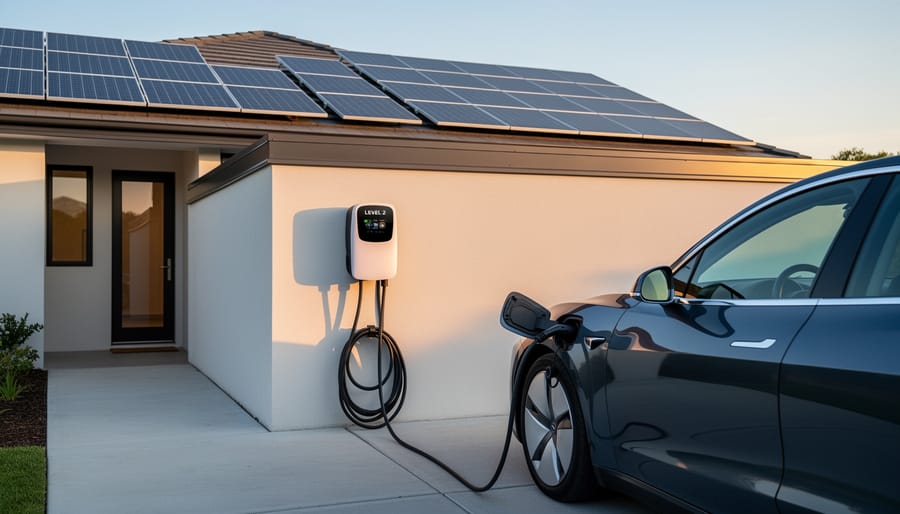
Your solar panels generate power during the day, your household appliances draw electricity throughout the day and evening, and your EV can demand anywhere from 7 to 19 kilowatts when charging. Without load management, these three demands can collide, overwhelming your electrical panel’s capacity and forcing your home to pull expensive grid power even when the sun is shining.
Load management acts as a smart traffic controller for your home’s electricity. It monitors your solar system’s real-time production, tracks your household’s current consumption, and adjusts your EV charger’s power draw to keep the total load within safe limits. When your solar panels are producing abundantly on a sunny afternoon and your household demand is low, the system allows faster charging. When clouds roll in or you’re running the air conditioning and oven simultaneously, it dials back the EV charging rate to prevent overloading your 200-amp panel.
For Ontario homeowners with solar installations, this coordination delivers two concrete benefits. First, it prevents the frustrating scenario where your EV pulls grid power at retail rates while your solar production goes to waste because the charging demand exceeded what your system could safely deliver. Second, it eliminates the need for costly electrical panel upgrades in many cases, since the charger automatically works within your existing capacity rather than requiring a larger service.
The technology makes the difference between simply owning solar panels and actually using that solar power strategically. You charge when the sun is strongest, your household draws what it needs, and nothing gets wasted or overloaded.
Key Buying Factors for Solar-Compatible EV Chargers
Smart Features and Solar Integration
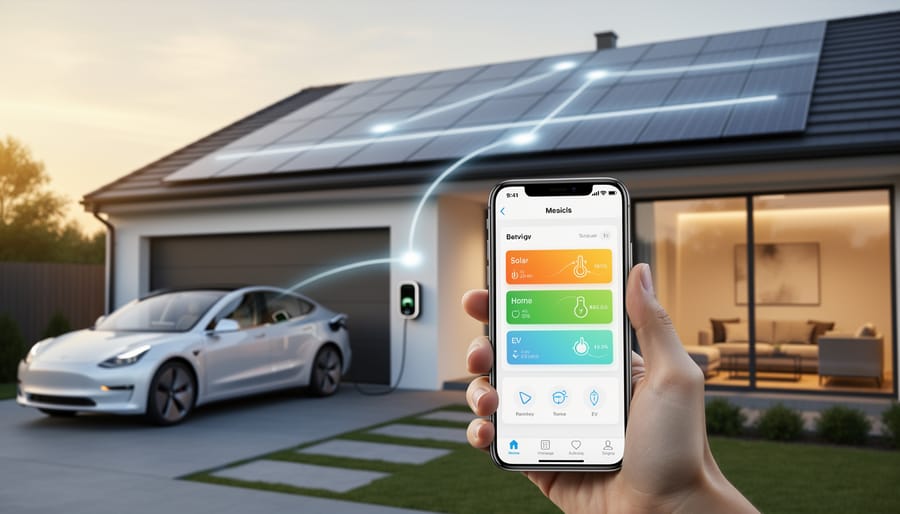
App connectivity stands as the foundation of effective solar integration, enabling you to monitor, schedule, and adjust charging sessions from your phone rather than manually configuring hardware settings. Smart charging features let you set automatic schedules that align EV charging with your solar system’s peak production hours, typically mid-morning through early afternoon when panels generate the most power. This scheduling capability reduces the amount of grid electricity you pull during evening hours when solar output drops.
Direct solar integration takes this coordination further by allowing the charger to receive real-time data from your solar inverter, dynamically adjusting charging power based on how much surplus solar energy is available at any moment. If clouds roll in or household usage spikes, the charger automatically throttles down to avoid drawing from the grid. If production surges above your home’s consumption, it ramps up charging speed to capture that excess energy.
Look for chargers compatible with popular solar monitoring platforms used in Ontario installations, ensuring seamless communication between your panels and vehicle. The best systems require minimal manual intervention once configured, automatically maximizing solar utilization while protecting your electrical panel from overload during periods of low solar production.
Charging Speed: Level 2 vs. Standard Outlets
The charging speed difference between Level 2 chargers and standard wall outlets fundamentally shapes how well you can use your solar production. Regular outlet charging adds just 3 to 5 miles of range per hour, painfully slow for anyone trying to charge during the six or seven peak solar hours on a typical Ontario day. You’d barely capture enough charge to cover a daily commute before the sun sets and your solar output drops.
Level 2 chargers deliver up to 60 miles of range per hour and fully charge most EVs overnight. More importantly for solar homeowners, that speed lets you pack a meaningful charge into the midday production window. If your solar system is cranking out surplus power between 10 a.m. and 3 p.m., a Level 2 charger can pull 200+ miles of range during that stretch. A standard outlet would capture maybe 25 miles from the same solar window, forcing you to draw grid power later.
The speed advantage means you actually use the energy you’re generating instead of selling it back to the utility at a low rate, then buying expensive grid power overnight to finish the job.
Price and Installation Costs
The upfront investment for an EV charger with load management breaks down into two main components. Equipment costs typically range from $350 to $750, depending on the features and brand you select. Installation adds another $800 to $2,000, with the final price determined by your home’s electrical setup, the distance from your panel to the charging location, and whether any panel upgrades are required.
While these initial costs might seem significant, the long-term savings make them worthwhile for solar homeowners. Home charging runs at roughly one-third the cost of DC fast-charging stations, and when you’re powering your EV with solar energy you’ve already paid for, the operational costs drop even further. Over a few years of ownership, the difference between home vs fast charging costs easily covers your equipment and installation expenses.
For Ontario solar homeowners specifically, the equation becomes even more favorable. You’re essentially converting excess daytime solar production into transportation fuel, maximizing the return on your solar investment while eliminating most or all of your vehicle’s energy costs.
Types of Load Management Systems for EV Chargers
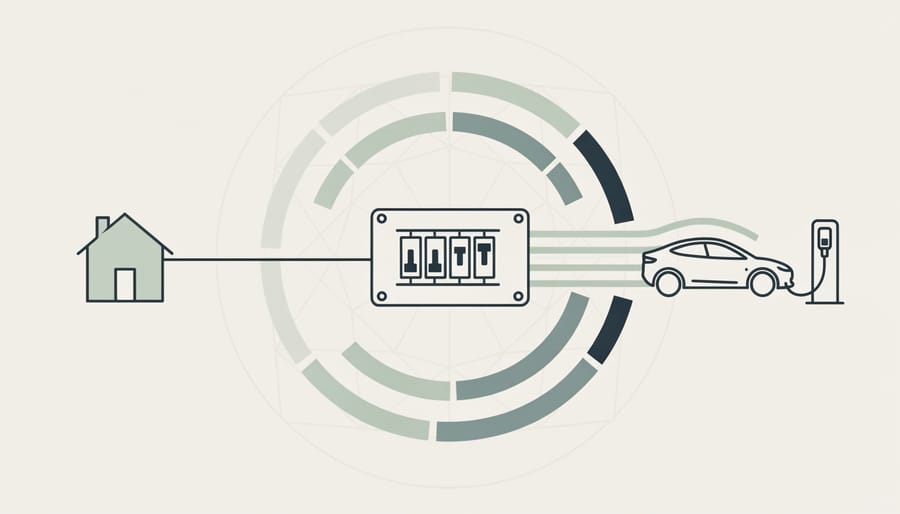
When you’re shopping for an EV charger for your solar home, understanding the three main types of load management systems helps you pick the right technology for your specific setup and budget.
Static load management sets a fixed power limit for your charger based on your electrical panel’s available capacity. Once installed, it reserves a predetermined amount of power for EV charging and never exceeds that threshold, even if other circuits in your home aren’t drawing power. Think of it as a permanent speed limit: safe and predictable, but it doesn’t adjust to real-time conditions. This approach works well for homeowners with straightforward electrical systems and predictable usage patterns, though you won’t maximize charging speed when your household demand is low.
Dynamic load management takes a smarter approach by continuously monitoring your home’s total power consumption and adjusting your EV charging rate in real time. If you turn on the dryer or oven, the system automatically dials back charging power to prevent overloading your panel. When those appliances shut off, charging ramps back up. This technology gives you the fastest possible charging at any moment without risking a tripped breaker. Ontario homeowners with older homes or limited electrical panel capacity benefit most from this flexibility, since it eliminates the need for costly panel upgrades in many cases.
Solar-integrated systems coordinate directly with your solar inverter or monitoring system, using production data to optimize when and how your EV charges. These chargers can prioritize solar power over grid electricity, schedule charging for peak production hours, and even pause charging when cloud cover reduces output. For Ontario solar homeowners serious about maximizing self-consumption and minimizing grid reliance, this represents the most advanced option. The charger essentially becomes part of your renewable energy ecosystem rather than just another load on your panel.
| Load Management Type | How It Works | Best For | Approximate Cost Range |
|---|---|---|---|
| Static | Fixed power limit set at installation | Simple setups with predictable usage | $350-$500 |
| Dynamic | Real-time monitoring and automatic adjustment | Homes with limited panel capacity or variable loads | $500-$650 |
| Solar-Integrated | Coordinates with solar production data | Solar homeowners maximizing self-consumption | $600-$750 |
The right choice depends on your solar system size, electrical panel capacity, and how much control you want over charging optimization. If your solar array produces significantly more power than your typical daytime household consumption, a solar-integrated system lets you capture that surplus for EV charging. Homes with smaller arrays or limited excess production often find dynamic load management provides the best balance between cost and functionality. Static systems make sense when you have ample electrical capacity and prefer a set-it-and-forget-it approach, though you’ll leave efficiency gains on the table.
Top EV Chargers with Load Management for 2026
Based on 2026 analysis from EnergySage and Car and Driver, several chargers stand out for Ontario homeowners who need robust load management alongside solar integration. The landscape has matured considerably, with more manufacturers offering dynamic power adjustment and direct coordination with residential solar systems.
Emporia’s Pro and Classic models earned Car and Driver’s Best Overall designation in April 2026 for good reason. Both units excel at real-time load management, monitoring your home’s total electrical demand and adjusting charging speed accordingly to prevent panel overload. The built-in energy monitoring tracks not just EV charging but your entire home’s consumption patterns, making it particularly valuable for solar households trying to understand when and how much power flows from panels versus the grid. The app lets you schedule charging to align with your solar production peaks, typically midday through late afternoon in Ontario.
For tight budgets, Lectron’s Portable Level 2 charger claimed the Best Budget title while still delivering essential load management features. You won’t get the sophisticated solar integration of higher-end models, but you can manually schedule charging during your peak solar hours and the unit handles basic power limiting to protect your electrical panel. The portability means you can move it between properties or take it to a cottage with solar panels.
Grizzl-E Duo addressed a growing need: households with two EVs. Car and Driver named it Least Expensive for Two EVs, and it manages load sharing between both vehicles automatically. When both cars plug in, the charger divides available power intelligently rather than overloading your panel or solar inverter capacity. This matters tremendously for Ontario solar homes where you might have 40 amps total capacity available after household loads, the Duo prevents both vehicles from trying to draw 32 amps simultaneously.
- Best Overall: Emporia Pro/Classic, real-time load management, whole-home energy monitoring, solar coordination scheduling
- Best for Solar Integration: Tesla Wall Connector, seamless integration with Tesla solar systems, app-based power adjustment, weather-resistant for Canadian climate
- Best Budget: Lectron Portable Level 2, manual scheduling, basic power limiting, portable between locations
- Best for Multiple Vehicles: Grizzl-E Duo, automatic load sharing between two EVs, prevents panel overload, Canadian-made durability
EnergySage’s broader 2026 analysis highlighted additional strong performers. Tesla’s Wall Connector integrates especially well if you already have Tesla solar panels, pulling production data directly to optimize charging windows. IYILO chargers brought advanced dynamic load management to the mid-price range, continuously monitoring panel capacity and adjusting EV charging in real time as your household demand fluctuates, crucial when your solar production dips on cloudy Ontario winter days but you’re running heat pumps and other loads.
ChargePoint and Schneider models appeared in EnergySage’s top tier primarily for commercial-grade reliability and sophisticated app controls. Both offer scheduling that can shift charging to match Ontario’s time-of-use rates while prioritizing solar production hours, though they command premium prices in the $650 to $750 range.
The common thread among 2026’s standout options is intelligent power management that goes beyond simple on-off timers. These chargers actively monitor available capacity, adjust charging speed dynamically, and coordinate with solar production patterns, exactly what Ontario homeowners need to charge efficiently without overwhelming their electrical systems or wasting their solar investment.
How to Match Your Charger to Your Solar System
Matching your EV charger to your solar system requires understanding both your electrical infrastructure and your solar production patterns to avoid overloading circuits while maximizing self-generated power use.
Start by reviewing your solar system’s output capacity, typically listed in kilowatts on your inverter documentation or monitoring app. Most Ontario residential solar arrays range from 5 kW to 10 kW, producing enough power during peak hours to run your household and charge an EV simultaneously, but only if your electrical panel and charger settings are configured correctly. Check your electrical panel capacity next, since many older homes have 100-amp or 125-amp panels that cannot handle full-speed EV charging alongside typical household loads without an upgrade to 200 amps.
Calculate your charging schedule around Ontario peak sun hours which typically occur between 10 a.m. and 3 p.m. during spring through fall. Program your charger to draw maximum power during these windows when your solar system produces surplus electricity, then throttle back or pause charging during evening hours when you’re relying on grid power. Most smart chargers with load management let you set these schedules through their apps, and solar-integrated models can adjust automatically based on real-time production data from your inverter.
Your installer should verify that your solar inverter, electrical panel, and EV charger can communicate effectively, whether through direct integration, a separate energy management system, or properly configured app-based scheduling. They’ll also confirm that your total electrical load (home + charger) stays within safe limits even when solar production drops on cloudy days or during winter months when output decreases significantly.
Common Mistakes to Avoid When Buying
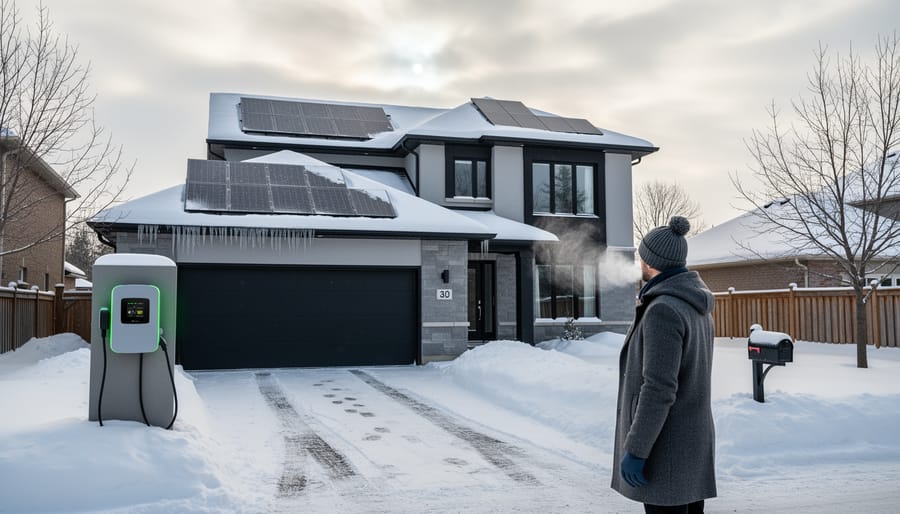
Ontario homeowners eager to start solar-powered EV charging often rush into charger purchases and overlook critical compatibility factors. The most expensive mistake is buying a basic charger without any load management capability, which forces you to either limit charging speed manually or risk tripping breakers when your solar system, household appliances, and EV charger all draw power simultaneously. Many homeowners also underestimate their electrical panel’s capacity limits, a 100-amp panel that already serves a full household may not support a 48-amp charger during peak demand, requiring costly panel upgrades that could have been avoided with proper load management technology.
Six pitfalls consistently trip up solar home EV charging projects:
- Skipping load management features, leaves you manually juggling power distribution and risking electrical overloads
- Ignoring solar integration capabilities, misses the opportunity to charge primarily during peak solar production hours
- Choosing the cheapest option without calculating long-term savings, a $400 basic charger costs more over five years than a $650 smart charger that maximizes solar use
- Overlooking Canadian weather ratings, chargers not rated for Ontario winters fail prematurely, voiding warranties
- Buying before consulting certified installers, results in mismatched components and code violations that delay installation
- Forgetting battery storage compatibility, prevents coordination with systems like Tesla Powerwall or other solar battery storage that could optimize charging during off-peak hours
Price-focused decisions particularly backfire when homeowners discover their bargain charger can’t communicate with their solar inverter, forcing them to charge entirely from the grid during expensive peak hours. Equally problematic is failing to verify that your installer holds proper certifications and understands Ontario’s Electrical Safety Code requirements for EV charging equipment. An improperly installed charger, even an expensive model with excellent load management, creates safety hazards and may not pass inspection, leaving you without legal charging capability until corrections are made.
Main Options Compared
When choosing an EV charger with load management for your solar-powered Ontario home, you’re essentially deciding between three implementation approaches, each with distinct trade-offs.
Static Load Management systems set fixed power limits based on your electrical panel’s capacity. They’re the most affordable option ($350, $500 range) and easiest to install, but they can’t adapt to real-time conditions. You’ll set a maximum charging rate that never exceeds your panel’s safe threshold, which works well for smaller solar arrays or homes with predictable energy patterns.
Dynamic Load Management chargers monitor your household’s actual power draw and adjust EV charging in real time. Models like the Emporia Pro excel here, throttling charging when your dryer runs or ramping up when loads drop. They cost more ($600, $750) but prevent overloads without unnecessarily limiting charging speed.
Solar-Integrated Systems take dynamic management further by coordinating directly with your solar inverter. These smart chargers prioritize charging during peak solar production, maximizing self-consumption of your generated power. Tesla and Schneider offer strong solar integration, though you’ll pay premium pricing and may need compatible inverter hardware.
For most Ontario solar homeowners, dynamic management offers the best balance of flexibility and value without requiring inverter compatibility.
Frequently Asked Questions
Can I charge my EV entirely on solar power?
Yes, but it depends on your solar system’s size, your EV’s battery capacity, and when you charge. A typical EV needs 50 to 75 kilowatt-hours for a full charge, which a properly sized residential solar array can generate over several sunny days. The key is timing: charge during peak solar production hours (usually 10 a.m. to 3 p.m.) when your panels produce more power than your home consumes. Load management systems help by automatically adjusting charging speed to match available solar power, pulling from the grid only when necessary. Ontario homeowners with larger solar installations often achieve 70 to 90 percent solar-powered charging during summer months, though winter production requires more grid supplementation.
Do I need a special electrical panel for load management?
Not necessarily, but your existing panel must have sufficient capacity. Most load management systems work with standard residential panels, monitoring total household demand and adjusting EV charging power to stay within safe limits. However, if your panel is already near capacity or lacks a 240-volt circuit for Level 2 charging, you may need an electrical upgrade before installation. A certified installer will assess your panel’s amperage rating (typically 100, 150, or 200 amps) and determine whether it can handle the additional load. Some newer smart panels include built-in load management features, but these are enhancements rather than requirements for most Ontario solar homes.
Will load management slow down my charging?
Load management adjusts charging speed dynamically based on available power, so charging may slow during peak household usage but accelerates when demand drops. Most homeowners don’t notice the difference since overnight charging provides plenty of time to reach full capacity, and smart scheduling can prioritize faster charging during off-peak hours or high solar production periods.
How much can I save with solar-powered EV charging?
Home charging already costs roughly one-third of DC fast-charging, and solar power reduces that further by eliminating or drastically cutting grid electricity costs for charging. Ontario homeowners charging primarily on solar power typically save $800 to $1,200 annually compared to gasoline costs, with additional savings from avoided time-of-use electricity rates.
What happens when solar production is low?
Your charger automatically draws power from the grid to maintain charging, with load management ensuring you don’t exceed your panel’s capacity. Most systems let you set preferences: charge only on solar power and pause when production drops, or allow grid supplementation to guarantee your vehicle is ready each morning regardless of weather conditions.
Does load management work with battery storage systems?
Yes, and this combination offers the most flexibility for solar-powered EV charging. The system can prioritize charging from your solar battery during evening hours when the sun isn’t shining but stored energy is available, then switch to grid power only when both solar production and battery reserves are depleted, maximizing your use of self-generated power around the clock.
The answers to these questions highlight why working with experienced installers matters. A certified professional will configure your load management system to match your specific solar setup, electrical capacity, and charging preferences, ensuring you get the maximum benefit from both your solar investment and your EV. They can also explain how Ontario’s electricity rate structure and any available incentives affect your total savings calculation, giving you a realistic picture of what to expect from your integrated solar and EV charging system.
Choosing an EV charger with load management for your solar-powered home is one of the smartest investments you can make in Ontario’s clean energy future. This technology maximizes the value of your solar installation by coordinating when and how much power flows to your vehicle, preventing electrical overloads while slashing your transportation costs. Instead of wasting excess solar production during peak generation hours, you’re converting it directly into miles on the road, at roughly one-third the cost of public fast-charging stations.
The right charger transforms your home into an integrated energy ecosystem where your solar panels, household consumption, and vehicle charging work in harmony rather than competing for limited capacity. You avoid expensive electrical panel upgrades, reduce strain on the grid during peak hours, and ensure your EV is ready when you need it without worrying about circuit trips or compromised household power.
Working with CANBIO’s network of certified installers gives you tailored guidance based on your specific solar system capacity, electrical infrastructure, and driving patterns. Our installers understand Ontario’s unique requirements and can configure your charger to maximize solar utilization while maintaining reliable performance through Canadian winters.
As more Ontario homeowners embrace electric vehicles and renewable energy, load management technology will become standard, not optional. You’re not just buying a charger; you’re building the foundation for a cleaner, more cost-effective, and resilient energy future. The combination of solar power and smart EV charging puts you at the forefront of Ontario’s sustainable transportation transformation.
Leave a Reply