
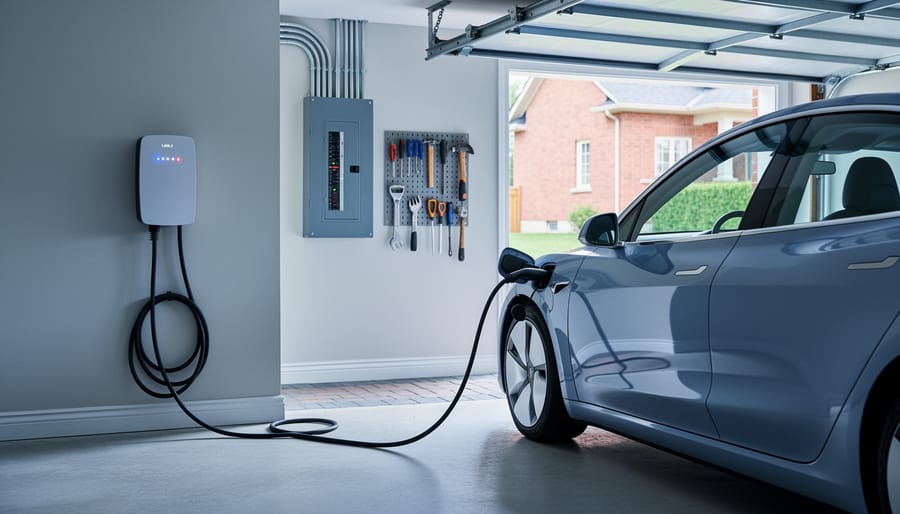
Expect to invest between $800 and $3,500 for a complete home EV charger installation in Ontario, with the final price depending on your electrical panel capacity, charger model, and installation complexity. Request quotes from at least three licensed electricians who specialize in EV installations to compare pricing and identify any necessary electrical upgrades before work begins. Check your current electrical panel for available capacity—if you’re running 100 amps or less, you’ll likely need a costly panel upgrade adding $1,500 to $2,500 to your total investment.
Take advantage of provincial and federal rebates that can slash your costs by up to $1,000, making the switch to home charging significantly more affordable than relying on public stations. Calculate the distance between your electrical panel and proposed charger location, as every additional foot of wiring adds $5 to $15 per foot to your installation cost. Choose a Level 2 charger rated between 32 and 40 amps for the best balance of charging speed and installation affordability, avoiding oversized units that demand expensive electrical work without meaningful benefits for most daily drivers.
Understanding these upfront costs helps you budget accurately while recognizing that home charging dramatically reduces your long-term charging costs compared to public alternatives. Ontario homeowners who invest wisely in proper installation enjoy convenient overnight charging, increased property value, and the satisfaction of supporting sustainable transportation from their own driveway.
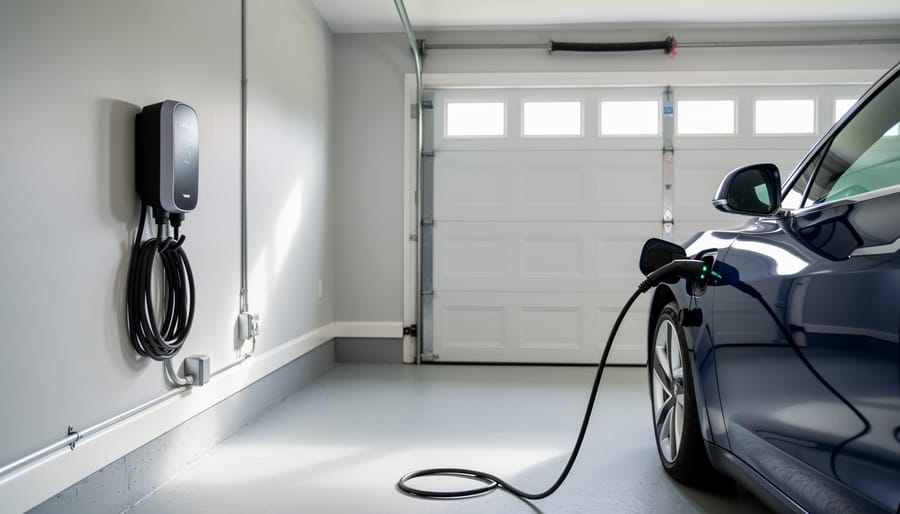
Breaking Down Home EV Charger Installation Costs
Equipment Costs: What You’re Actually Buying
Understanding what you’re purchasing begins with knowing the two main charger types available to Ontario homeowners. Level 1 chargers use your standard 120-volt household outlet and typically come included with your EV purchase. While they’re essentially free, they charge quite slowly—adding only 5-8 kilometers of range per hour. For most drivers, this simply isn’t practical for daily use.
Level 2 charging operates on 240 volts (like your dryer) and delivers 30-60 kilometers of range per hour, making it the preferred choice for home installations. Quality Level 2 chargers in Ontario range from $600 to $1,800 depending on features and brand reputation.
Basic hardwired models start around $600-$900 and provide reliable charging without extra bells and whistles. These work perfectly well if you’re simply looking to charge your vehicle overnight. Mid-range options ($900-$1,300) often include useful features like scheduling capabilities and energy monitoring.
Smart chargers at the higher end ($1,300-$1,800) connect to your smartphone and home network, offering advanced scheduling, usage tracking, and integration with time-of-use electricity rates—potentially saving you money long-term. “The smart features paid for themselves within eighteen months through off-peak charging,” shared one Mississauga homeowner who installed their system last year.
When choosing equipment, consider that higher-quality chargers from established manufacturers typically include better warranties (often 3-5 years) and weather resistance ratings suitable for Ontario’s climate. Our local installation teams have seen budget options fail during harsh winters, so investing in quality equipment designed for Canadian conditions makes practical sense for long-term reliability and peace of mind.
Installation Labor: Why Professional Installation Matters
Professional installation is essential for safety and compliance, and understanding labor costs helps you budget accurately. In Ontario, certified electricians typically charge between $80 to $150 per hour for EV charger installation work. Most standard residential installations take 4 to 8 hours, bringing total labor costs to approximately $320 to $1,200, depending on your home’s electrical setup and the complexity of the job.
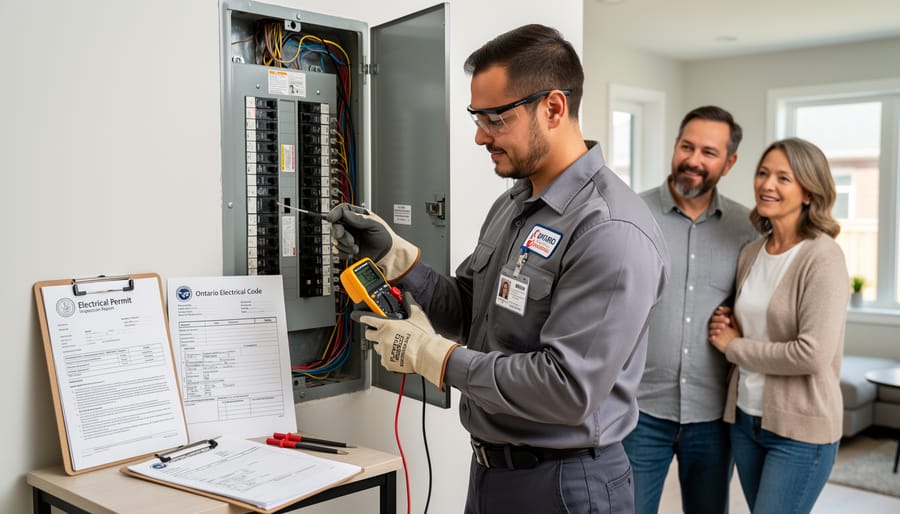
What does professional installation include? A qualified electrician will assess your electrical panel’s capacity, install any necessary upgrades like a dedicated 240-volt circuit, mount your charging unit in the optimal location, connect all wiring according to Ontario Electrical Safety Code requirements, and ensure proper grounding. They’ll also handle the required permits and arrange for inspections by the Electrical Safety Authority (ESA), which is mandatory in Ontario.
“Hiring a local certified electrician gave me complete peace of mind,” shares Michael from Mississauga. “They identified that my older panel needed an upgrade before installation, which prevented potential safety issues down the road.”
Choosing professional installation over DIY attempts protects your investment and ensures your charging station operates safely for years. Licensed electricians carry liability insurance and provide warranties on their work, typically ranging from one to three years. They also understand local building codes and can navigate the permit process efficiently, saving you time and potential headaches. While labor represents a significant portion of your total installation cost, it’s an investment in safety, reliability, and proper system performance.
Hidden Costs That Catch Homeowners Off Guard
Electrical Panel Upgrades
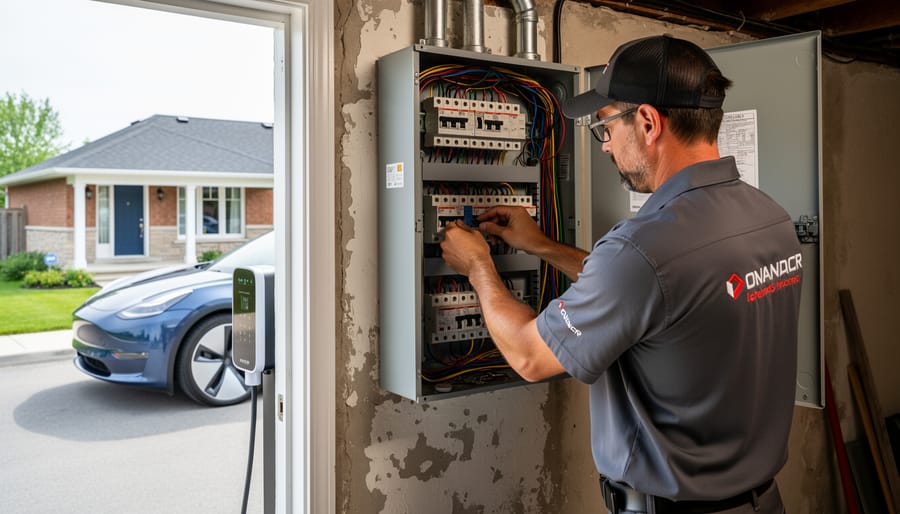
Many Ontario homes, particularly those built before the 1990s, weren’t designed to handle the electrical demand of modern EV chargers. Your home’s electrical panel acts as the heart of your electrical system, distributing power throughout your property. When installing a Level 2 EV charger, which typically requires a dedicated 40 to 50-amp circuit, your existing panel may not have sufficient capacity.
If your panel is already near its maximum load or only has 100-amp service, an upgrade becomes necessary. Most EV charger installations work best with 200-amp service, which provides the headroom needed for safe, reliable charging alongside your other household needs.
Electrical panel upgrades in Ontario typically cost between $1,200 and $3,500, depending on several factors. The final price varies based on your current panel’s condition, the amperage increase required, and whether additional work like meter base replacement is needed. Homes with older fuse boxes or aluminum wiring may see costs at the higher end of this range.
“We see this quite often in established Ontario neighbourhoods,” shares one local electrician. “Homeowners are surprised to learn they need an upgrade, but it’s really an investment in their home’s overall electrical capacity and safety.”
The good news is that this upgrade benefits your entire home, not just your EV charging. You’ll have increased capacity for future electrical needs, improved safety features, and potentially higher property value. Some Ontario homeowners also find that combining this work with their charger installation reduces overall labour costs compared to scheduling separate projects.
Distance and Location Challenges
The distance between your electrical panel and where you’d like to install your EV charger plays a significant role in determining your total installation cost. If your garage is situated far from your main electrical panel, you’ll need longer cable runs, which means more materials and labour hours. Ontario electricians typically charge between $8 to $15 per foot for additional wiring, so a charger installed 100 feet from your panel could add $800 to $1,500 to your project.
Outdoor installations present their own considerations. While they offer convenient charging access, they require weather-resistant equipment and additional protective measures like conduit housing, which can increase costs by $300 to $800. Detached garages or workshop installations often prove most expensive since they may require trenching to run underground wiring from your home’s main panel. This specialized work can add $1,500 to $3,000 depending on the distance and terrain.
The good news is that experienced local installers in Ontario can assess your property and suggest cost-effective routing options you might not have considered. Planning your charger location strategically during the decision-making phase helps you avoid unnecessary expenses while ensuring safe, reliable charging for years to come.
Permits and Inspections
In Ontario, obtaining an electrical permit isn’t optional—it’s a legal requirement for EV charger installation. This permit typically costs between $50 and $200, depending on your municipality. Your licensed electrician will usually handle the permit application process as part of their service, though it’s worth confirming this upfront to avoid surprises.
The permit ensures your installation meets the Ontario Electrical Safety Code, protecting both your home and your family. Once the work is complete, an Electrical Safety Authority (ESA) inspector will verify everything is properly installed. This inspection is usually included in your permit fee, though some municipalities charge separately.
While permits might seem like an added expense, they’re non-negotiable for good reason. Without proper permitting and inspection, your home insurance could deny claims related to the charger, and you may face difficulties when selling your property. Future buyers will want confirmation that all electrical work was done to code.
Many Ontario homeowners appreciate that local electricians familiar with regional requirements streamline this process efficiently. They understand municipal variations and can navigate the paperwork quickly, ensuring your installation stays on schedule while meeting all safety standards.
Ontario Rebates and Incentives That Lower Your Costs
Federal Zero-Emission Vehicle Programs
Canadian EV owners can significantly reduce their home charger installation costs through federal incentive programs. The Canada Greener Homes Grant provides rebates of up to $5,000 for eligible home energy upgrades, which can include EV charging infrastructure when combined with other qualifying improvements. Through the federal Zero-Emission Vehicle Infrastructure Program, homeowners may access support for installing Level 2 charging stations at their residence.
Ontario residents should also explore the Incentives for Zero-Emission Vehicles program, which has historically offered rebates that help offset both vehicle and charging equipment costs. While program availability and funding levels change periodically, these federal initiatives can reduce your out-of-pocket expenses by hundreds or even thousands of dollars.
To maximize your savings, apply for these programs before beginning your installation. Most require pre-approval and specific documentation from certified installers. Our team stays current on all available incentives and can guide you through the application process, ensuring you receive every dollar you’re entitled to. This local expertise helps Ontario homeowners navigate the sometimes complex rebate landscape while making sustainable transportation more affordable for your family.
Ontario-Specific Programs and Utility Rebates
Ontario homeowners have access to several financial incentives that can significantly reduce your EV charger installation costs. While provincial EV rebate programs have evolved over time, it’s worth checking current offerings as they can provide substantial savings on both vehicle purchases and home charging infrastructure.
Many local utility companies across Ontario offer their own rebate programs to encourage electric vehicle adoption. For example, some utilities provide rebates ranging from $500 to $1,000 for Level 2 home charger installations. These programs often include requirements like installing during off-peak hours or participating in managed charging programs that help balance the electrical grid.
Time-of-use electricity rates in Ontario also work in your favor. By charging your EV overnight when rates are lowest, you’ll maximize your savings on ongoing operational costs. Our local team stays current with all available incentives and can guide you through the application process, ensuring you don’t miss out on any opportunities to reduce your installation investment. We’ve helped countless Ontario homeowners access these programs, making the transition to electric vehicle ownership more affordable while supporting our province’s sustainable energy goals.
How to Claim Your Rebates
Claiming your EV charger rebate is straightforward when you know what to prepare. Start by confirming your eligibility through the official government program website—most Ontario homeowners qualify, but requirements vary by municipality. Before installation, gather essential documents including proof of vehicle ownership or lease, home ownership verification, and quotes from certified installers.
Next, schedule your installation with a qualified electrician who understands program requirements. Keep all receipts, invoices, and electrical permits—these are crucial for your application. Many installers familiar with local rebate programs can help streamline this process.
After installation, submit your application online within the specified timeframe, typically 60 to 90 days. Upload clear photos of your installed charger, final invoices, and proof of payment. Applications usually process within four to six weeks. Our team has guided hundreds of Ontario residents through successful rebate claims, and we’re here to ensure you maximize your savings. Don’t leave money on the table—these rebates can cover up to 50% of your installation costs.
Factors That Influence Your Final Installation Price
Your Home’s Electrical Capacity
Your home’s electrical capacity plays a crucial role in determining installation costs. Most homes in Ontario have 100 to 200-amp electrical panels, and installing an EV charger typically requires a dedicated 40 to 50-amp circuit for Level 2 charging. Before installation, a qualified electrician will assess whether your current panel can handle the additional load.
If your electrical panel is near capacity or outdated, you may need an upgrade, which can add $1,500 to $3,000 to your project. Homes built before the 1990s often require this upgrade to safely accommodate EV charging alongside existing appliances. Consider scheduling an energy audit to better understand your home’s overall energy consumption and identify potential efficiency improvements that could offset the increased electrical demand.
The distance between your electrical panel and charging location also matters. If your panel sits far from your garage or parking area, expect additional costs for running new wiring. Our local Ontario electricians can evaluate your specific situation and recommend the most cost-effective approach, ensuring your installation meets safety standards while minimizing unnecessary expenses.
Charger Features and Smart Technology
When choosing your EV charger, you’ll encounter two main categories: basic (Level 2) chargers and smart chargers, with prices varying significantly between them.
Basic chargers in Ontario typically cost between $400 and $800. These straightforward units charge your vehicle reliably but offer minimal features beyond on/off functionality. They’re a solid choice if you simply want to plug in overnight and aren’t concerned about monitoring your energy usage.
Smart chargers range from $800 to $1,500 but deliver features that many Ontario homeowners find worthwhile. These connected devices allow you to schedule charging during off-peak hours when electricity rates are lowest—a significant advantage given Ontario’s time-of-use pricing structure. You can control everything through smartphone apps, monitoring energy consumption and tracking your environmental impact in real-time.
Popular features include WiFi connectivity, scheduling capabilities, usage tracking, and integration with home energy management systems. Some models even work alongside solar panel installations, allowing you to charge primarily with renewable energy and maximize your sustainable impact.
For most Ontario homeowners, mid-range smart chargers ($900-$1,200) offer the best value. The ability to schedule charging during off-peak hours can save you hundreds annually on electricity costs, helping offset the higher upfront investment within just a few years. Local experts consistently recommend models with basic smart features rather than entry-level chargers, especially for households managing multiple vehicles or looking to reduce their carbon footprint. Consider your daily driving patterns and electricity usage when deciding which features truly matter for your situation.
Workplace EV Charger Installation: What Businesses Need to Know
Commercial Installation Cost Considerations
While this article focuses primarily on home installations, many Ontario business owners are also exploring workplace EV charging solutions. Commercial installations differ significantly in both scope and cost, and understanding these differences helps you set realistic expectations if you’re considering charging stations at your workplace.
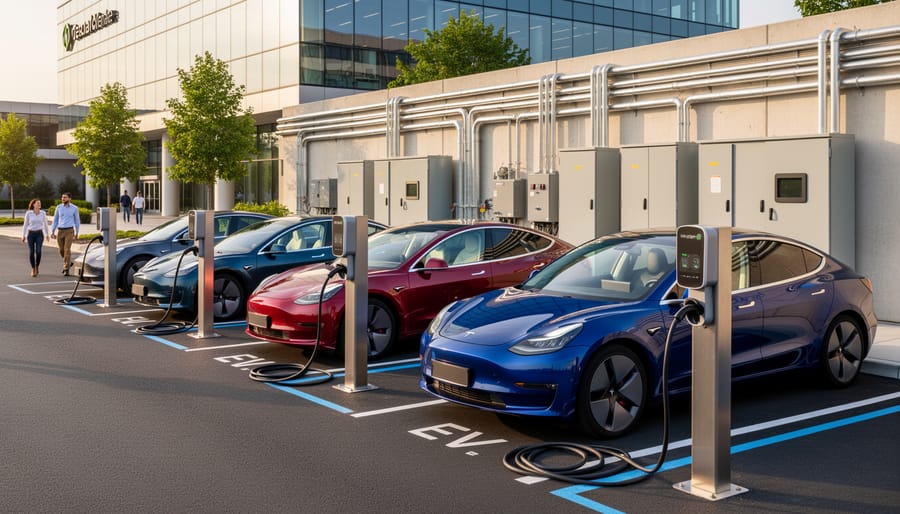
The most notable difference is scale. Rather than installing a single Level 2 charger, businesses typically need multiple charging stations to accommodate employee and visitor vehicles. Each additional unit increases equipment and installation costs, though you may benefit from volume pricing when installing several chargers simultaneously.
Commercial installations also require higher electrical capacity. Where a home might upgrade to a 200-amp panel, businesses often need substantial electrical infrastructure improvements to support multiple charging stations operating concurrently. This can mean transformer upgrades, trenching for underground cables, and dedicated electrical rooms—investments that can range from $15,000 to $50,000 or more depending on your facility’s existing infrastructure.
The good news? Ontario businesses can access specialized incentives and rebates that help offset these higher costs. Programs targeting commercial properties often provide more substantial funding than residential incentives, recognizing the larger investment required.
Local electrical contractors experienced with commercial projects can assess your specific needs and identify cost-saving opportunities. They’ll evaluate your electrical capacity, recommend optimal charger placement to minimize installation expenses, and guide you through available business incentive programs. Many Ontario companies find that workplace charging not only supports employee satisfaction but also demonstrates meaningful commitment to environmental sustainability.
Business Incentives and Tax Benefits
Ontario businesses investing in workplace EV charging stations can access valuable financial incentives that significantly reduce installation costs. The federal government’s Zero Emission Vehicle Infrastructure Program provides funding to cover a substantial portion of equipment and installation expenses for commercial properties. This program recognizes that workplace charging encourages EV adoption among employees while demonstrating environmental leadership.
Business owners can also claim capital cost allowances on EV charging equipment, providing tax deductions that improve long-term return on investment. These deductions apply to the chargers themselves and associated electrical infrastructure upgrades. Many Ontario municipalities offer additional property tax incentives or expedited permitting for businesses installing charging stations, streamlining the process.
Beyond direct financial benefits, workplace charging stations serve as powerful employee recruitment and retention tools while supporting corporate sustainability goals. Companies installing charging infrastructure often see positive community recognition and alignment with green business certifications. Local electrical contractors with experience in commercial EV installations can help navigate available incentive programs and ensure your business maximizes every available benefit. The combination of government funding, tax advantages, and workplace benefits makes commercial EV charging infrastructure an increasingly smart investment for forward-thinking Ontario businesses.
How to Save Money on Your EV Charger Installation
Reducing your EV charger installation costs doesn’t mean cutting corners on safety or quality. With the right approach, Ontario homeowners can save hundreds or even thousands of dollars while still getting a professional, reliable setup.
Here are proven strategies to keep your installation affordable:
- Get at least three quotes from licensed electricians. Prices can vary significantly between contractors, and comparing options helps you understand the fair market rate in your area. Ask each electrician to break down their estimate so you can see exactly where your money goes.
- Time your installation strategically. If you’re planning other electrical work like a panel upgrade or home renovations, bundle these projects together. Electricians often offer better rates when completing multiple jobs at once, saving you on service call fees and labor costs.
- Choose the most practical location for your charger. Installing close to your electrical panel minimizes the wiring distance, which directly reduces material and labor expenses. While garage installations are popular, sometimes a carport or driveway location closer to your panel makes more financial sense.
- Consider a Level 1 charger if your daily driving is minimal. These plug into standard outlets and cost nothing to install, though charging takes longer. For many commuters driving under 50 kilometers daily, this free option works perfectly fine.
- Check for rebates and incentives before scheduling installation. Ontario residents may qualify for provincial or federal programs that offset installation costs. Some electricity providers also offer time-of-use rates that reduce your ongoing charging expenses.
“We saved nearly $800 by having our charger installed during our kitchen renovation,” shares Mark from Burlington. “The electrician was already upgrading our panel, so adding the EV circuit was straightforward.”
Don’t forget to verify that any electrician you hire is properly licensed and insured. The lowest quote isn’t always the best value if it means compromising on safety standards or workmanship quality. A professionally installed charger protects your investment and ensures your system operates efficiently for years to come.
Choosing the Right Installer in Ontario
Finding the right professional to install your home EV charger is just as important as understanding the costs involved. In Ontario, working with qualified electricians ensures your installation meets electrical code requirements and safety standards while protecting your investment.
Start by looking for certified EV charger installers who hold proper licensing through the Electrical Safety Authority (ESA). These professionals understand Ontario’s specific regulations and will pull the necessary permits for your installation. Licensed electricians also carry liability insurance, giving you peace of mind if any issues arise during or after the work is completed.
When interviewing potential installers, ask about their experience with EV charger installations specifically. While any licensed electrician can handle the job, those with dedicated EV experience often work more efficiently and can spot potential challenges before they become costly problems. Request references from previous EV charger installations and check online reviews to gauge customer satisfaction.
Get detailed written quotes from at least three installers. Each quote should break down labor costs, materials, permit fees, and any additional charges. Be wary of quotes that seem unusually low, as they might indicate shortcuts or hidden fees that appear later. Ask whether the quote includes the ESA inspection fee and connection permit, which typically add $250 to $400 to your total cost.
Don’t hesitate to ask questions about the installation process, timeline, and warranty coverage. Reputable installers will gladly explain their approach and stand behind their work with warranties on both labor and materials. They should also discuss your home’s electrical capacity and whether panel upgrades are necessary before beginning work.
Local installers often provide added value through their understanding of Ontario’s rebate programs and can help you navigate the application process, potentially saving you hundreds of dollars on your total investment.
Frequently Asked Questions About EV Charger Installation Costs
What’s the average cost for EV charger installation in Ontario?
Most Ontario homeowners pay between $1,200 and $2,500 for a complete Level 2 charger installation, though costs can vary based on your electrical panel’s capacity, distance from the panel to your garage, and the charger model you choose. Taking advantage of available rebates can significantly reduce your out-of-pocket expenses.
Can I install an EV charger myself to save money?
While you might be tempted to tackle this as a DIY project, electrical work in Ontario requires a licensed electrician to ensure safety and code compliance. Professional installation protects your home, maintains your warranty coverage, and ensures you’re eligible for provincial rebates that require certified installation.
How long does the installation process typically take?
Most straightforward installations are completed in 4 to 8 hours, though complex jobs requiring panel upgrades or extensive wiring may take a full day or two. Your installer will assess your specific situation during the initial consultation and provide an accurate timeline.
Do I need a permit for EV charger installation?
Yes, Ontario requires an electrical permit for EV charger installations, and your licensed electrician will typically handle this paperwork as part of their service. The permit ensures your installation meets safety standards and is properly inspected.
Will installing an EV charger increase my home’s value?
Absolutely! As electric vehicles become more popular, having a pre-installed home charging station is an attractive feature for potential buyers and can enhance your property’s marketability. Many real estate experts view it as a valuable upgrade similar to other energy-efficient home improvements.
Can one charger handle multiple electric vehicles?
Yes, though you’ll need to coordinate charging times if you have multiple EVs, or consider installing a second charger if simultaneous charging is important to your household. Load-sharing systems are also available that intelligently distribute power between two vehicles.
Understanding these common questions helps you move forward with confidence in your EV charging setup. Ontario’s growing network of experienced installers specializing in home charging solutions means you’ll have local expertise guiding you through every step. The environmental benefits of driving electric are even greater when paired with proper home charging infrastructure, reducing your carbon footprint while enjoying the convenience of starting each day with a fully charged vehicle. Don’t let uncertainty about the installation process hold you back from embracing clean transportation—the investment pays dividends in convenience, cost savings, and environmental impact for years to come.
Investing in a home EV charger may seem like a significant upfront expense, but when you consider the long-term benefits, it becomes clear that this is a smart financial and environmental decision. By charging at home, you’ll consistently save money compared to relying on public charging stations, and you’ll enjoy the unmatched convenience of starting each day with a full battery. Over the years of EV ownership, these savings add up substantially while reducing your carbon footprint and contributing to Ontario’s cleaner, more sustainable future.
The federal and provincial rebate programs available to Ontario residents help make this investment even more accessible, significantly reducing your out-of-pocket costs. When you factor in lower maintenance costs, potential electricity rate optimizations, and the increasing value that home charging infrastructure adds to your property, the return on investment becomes even more compelling.
Taking the next step doesn’t have to be overwhelming. Getting competitive quotes from qualified installers in your area ensures you’ll find the best value for your specific situation. At CANBIO, we connect Ontario homeowners with trusted local experts who understand regional electrical codes, permit requirements, and available incentives. Our platform makes it simple to compare options and find an installer who matches your needs and budget.
Ready to make the switch to convenient, cost-effective home charging? Request your free quotes today and join thousands of Ontario residents who are already enjoying the benefits of home EV charging while building a greener tomorrow.
Leave a Reply